

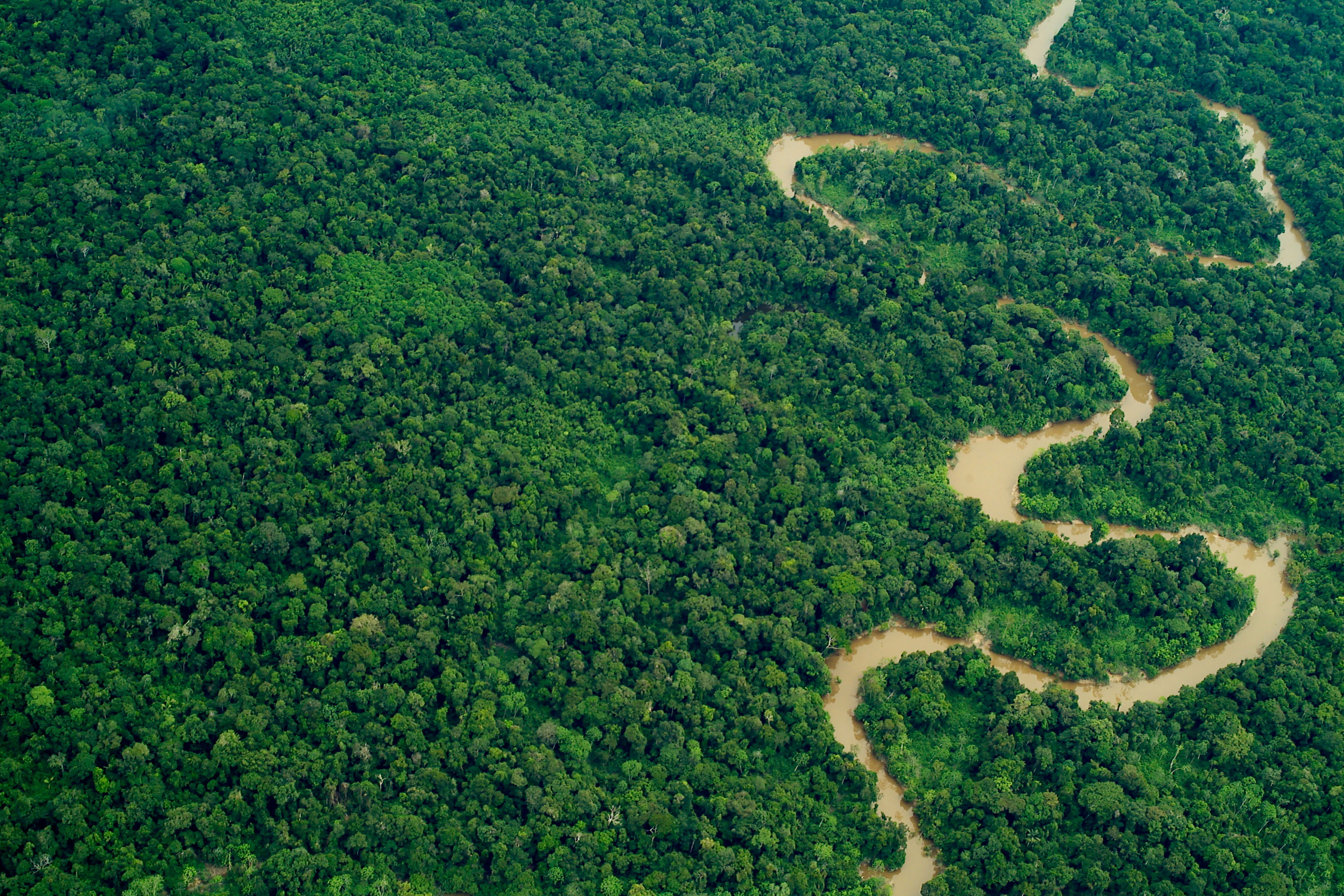
Vanishing Footprints: The Race to Protect Isolated Indigenous Peoples in the Amazon’s Yavari-Tapiche Corridor
A new report released today documents mounting threats to a proposed 16-million-hectare territory along Brazil and Peru’s western Amazon, home to the world’s largest known population of Indigenous Peoples in Voluntary Isolation and Initial Contact (PIACI). Vanishing Footprints: The Race to Protect Isolated Indigenous Peoples in the Amazon’s Yavari-Tapiche Corridor was co-authored by the Regional Organization of Indigenous Peoples of the East (ORPIO), the Coordination of Indigenous Organizations of the Brazilian Amazon (COIAB), the Interethnic Association for the Development of the Peruvian Rainforest (AIDESEP), and Earth Insight.
Deep in the western Amazon lies one of the most biodiverse and culturally significant regions on Earth: the proposed 16-million-hectare Yavarí-Tapiche Territorial Corridor spanning Peru and Brazil. This vast forest is home to the world’s largest known concentration of Indigenous Peoples in Voluntary Isolation and Initial Contact (PIACI), communities who continue to live beyond sustained contact with the outside world.
But the future of the corridor is under growing threat.
This report documents the accelerating pressures closing in on these forests and the peoples who depend on them. Through geospatial analysis, frontline testimony, and collaborative research led by Indigenous organizations and in collaboration with Earth Insight, the report reveals how oil and gas expansion, logging, mining, roads, and political rollbacks are fragmenting one of the Amazon’s last great intact forest landscapes.
Without urgent protection, forced contact could lead to disease, violence, cultural loss, and irreversible ecological damage.
The Yavarí-Tapiche Territorial Corridor represents an Indigenous-led strategy for territorial protection, cross-border governance, climate stability, and the defense of human rights.
Key Findings:
- Oil and gas blocks overlap 10% of the corridor, including nearly 1.7 million hectares of intact tropical moist forest, 907,000 hectares of Key Biodiversity Areas, and 713,000 hectares of Protected Areas.
- Logging concessions overlap 500,000 hectares of the Peruvian side of the corridor and intact tropical moist forest, despite legal bans against concessions in proposed PIACI reserves.
- 12% of PIACI reserves under application are at risk from oil and gas; 162,000 hectares of all PIACI reserves face direct overlap from logging concessions.
- Two proposed highways threaten to fragment the corridor. The first connects Cruzeiro do Sul in Brazil with Pucallpa in Peru and cuts directly through the Isconahua PIACI Reserve. A second would link Jenaro Herrera in Loreto with Colonia Angamos in the Yavarí River basin.
- Illegal activities, including gold mining, cross-border drug trafficking from the “Three Frontiers” region where Colombia, Peru, and Brazil intersect; illegal logging, and illegal fishing and hunting compound these threats.
Oil threats: Poison in the Water
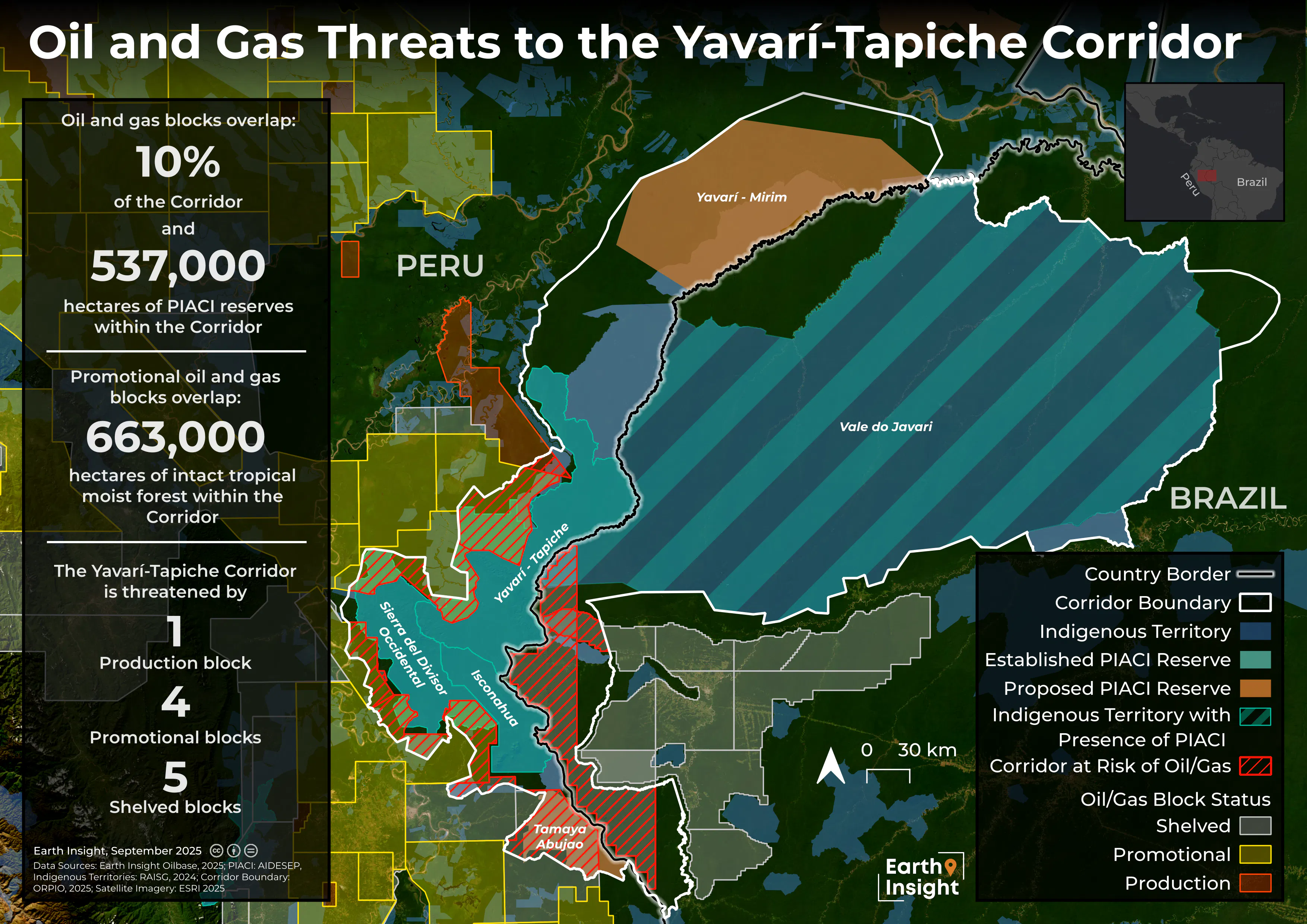
There are oil and gas blocks on offer in the Yavarí-Tapiche and Sierra de Divisor Occidental Kapanawa PIACI reserves, as well as shelved blocks in the solicited Tamaya Abujao PIACI reserve. Oil spills would carry these threats downstream to Indigenous and PIACI communities whose diets and lives rely on the Amazon river basin. In 2025, a petition submitted to the Inter-American Commission on Human Rights by the Interethnic Association for the Development of the Peruvian Rainforest (AIDESEP) on the threat oil and gas pose to PIACI and Indigenous communities in the region, referenced more than 800 oil spills into rivers.
Infrastructure: The Fishbone Effect
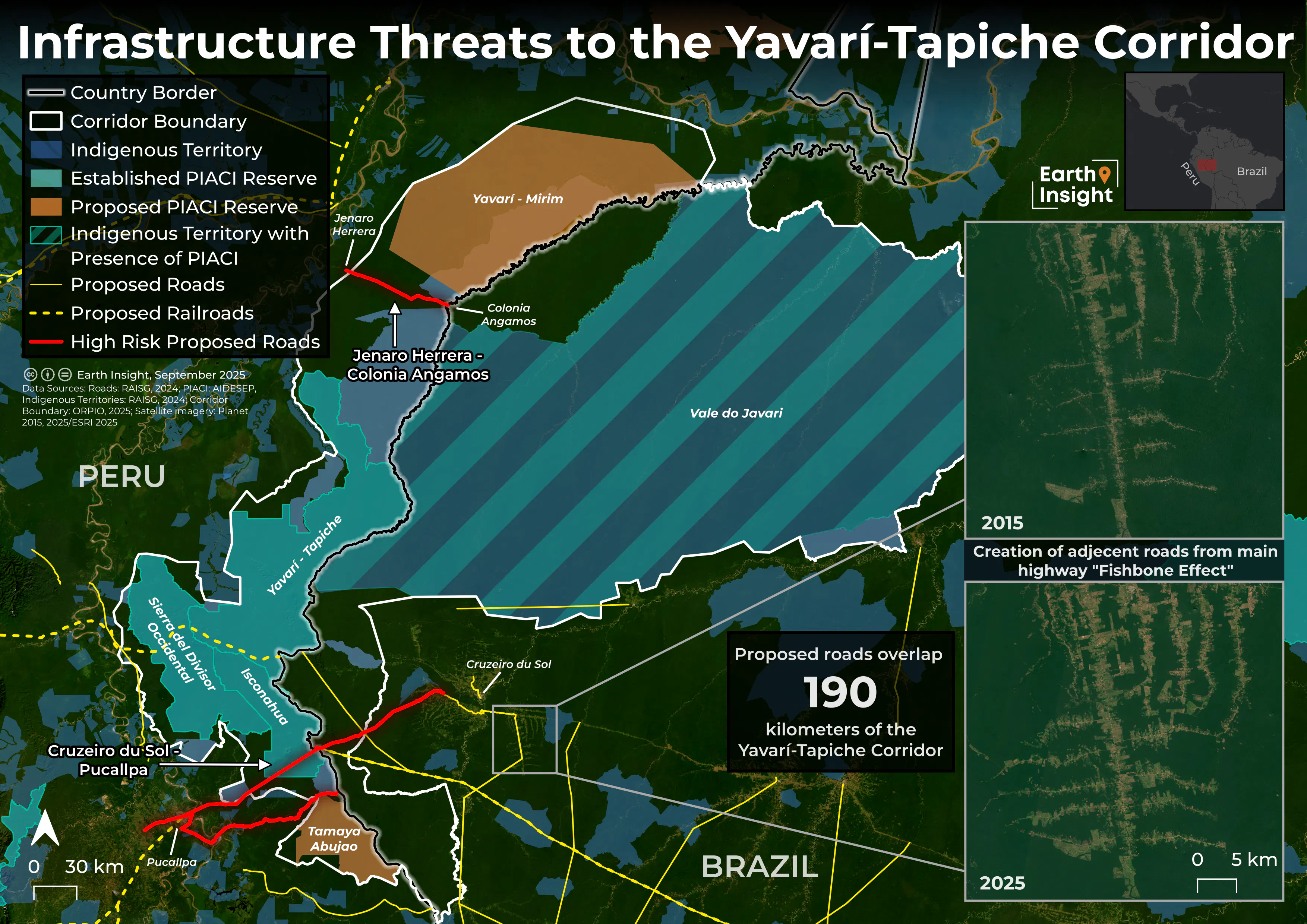
Roads in the rainforest can trigger deforestation up to 10km away. Infrastructure expansion, such as roads and highways, can spread unofficial roads into forests, increasing risk of deforestation and creating what is known as the “fishbone effect” as seen in the map insert. For every kilometre of legal road, there are an estimated 3 kilometres of illegal road that penetrate deep into forests. Loggers, goldminers, unauthorized land settlements, and criminal networks build out from official roads, which opens intact forests to deforestation and a higher risk of fires.
Mining and Logging: Felling the Amazon
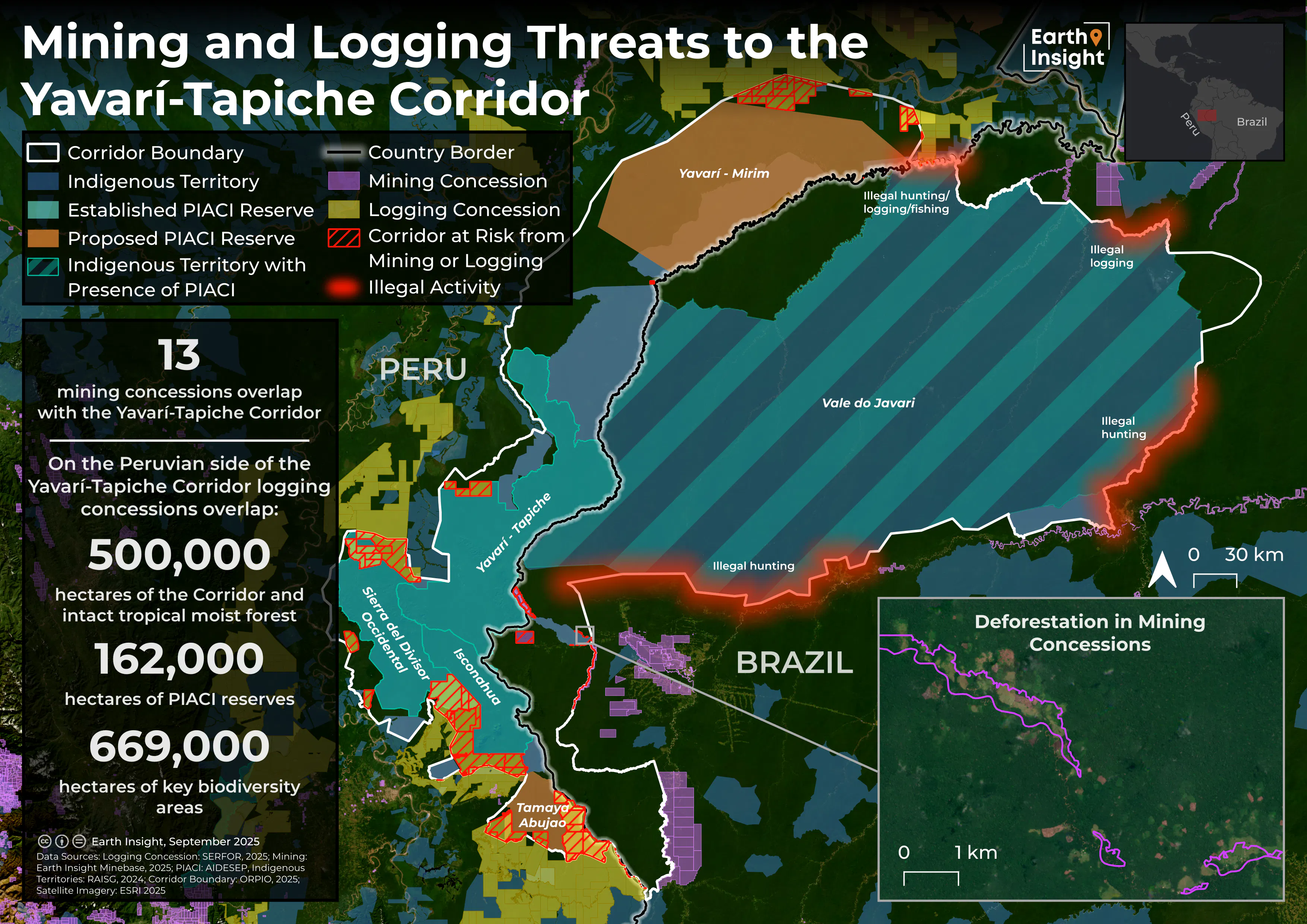
Between 2001 and 2023, extractive activities were responsible for half of the more than 3 million hectares of forest lost in Peru’s Amazon. Two departments partially included in the Yavarí-Tapiche Territorial Corridor, Loreto and Ucayalli, lost more than 500,000 hectares each.
The Peak Carbon of the Yavarí-Tapiche Corridor
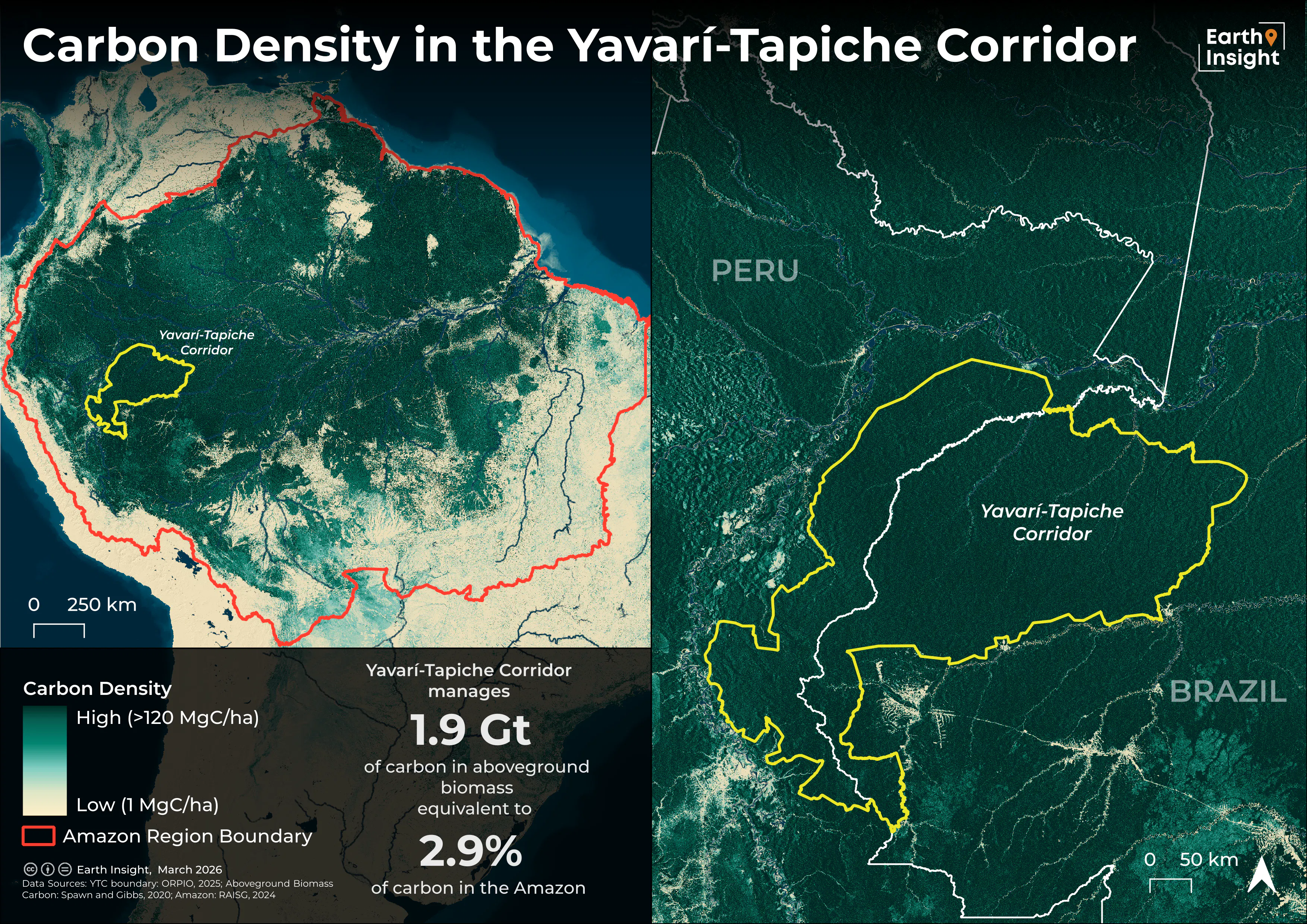
As a High Forest, Low Deforestation (HFLD) national jurisdiction, Loreto (where most of the Yavarí-Tapiche corridor is located in Peru) contains more than half of the country’s above-ground carbon stock, with particularly high carbon densities (98.8 ± 29.4 Mg C ha-1). Ucayali, which also forms part of the corridor, holds the second largest regional carbon stocks. As deforestation accelerates across the Amazon, Indigenous management of such intact, high-density forests grows more critical to sustain this peak carbon region as an effective strategy to meet nationally determined carbon targets. For example, Peru would need to retire its entire vehicle fleet to compensate for even a 50% drop in the sequestration services provided by Indigenous-managed forests.
Key Biodiversity Areas
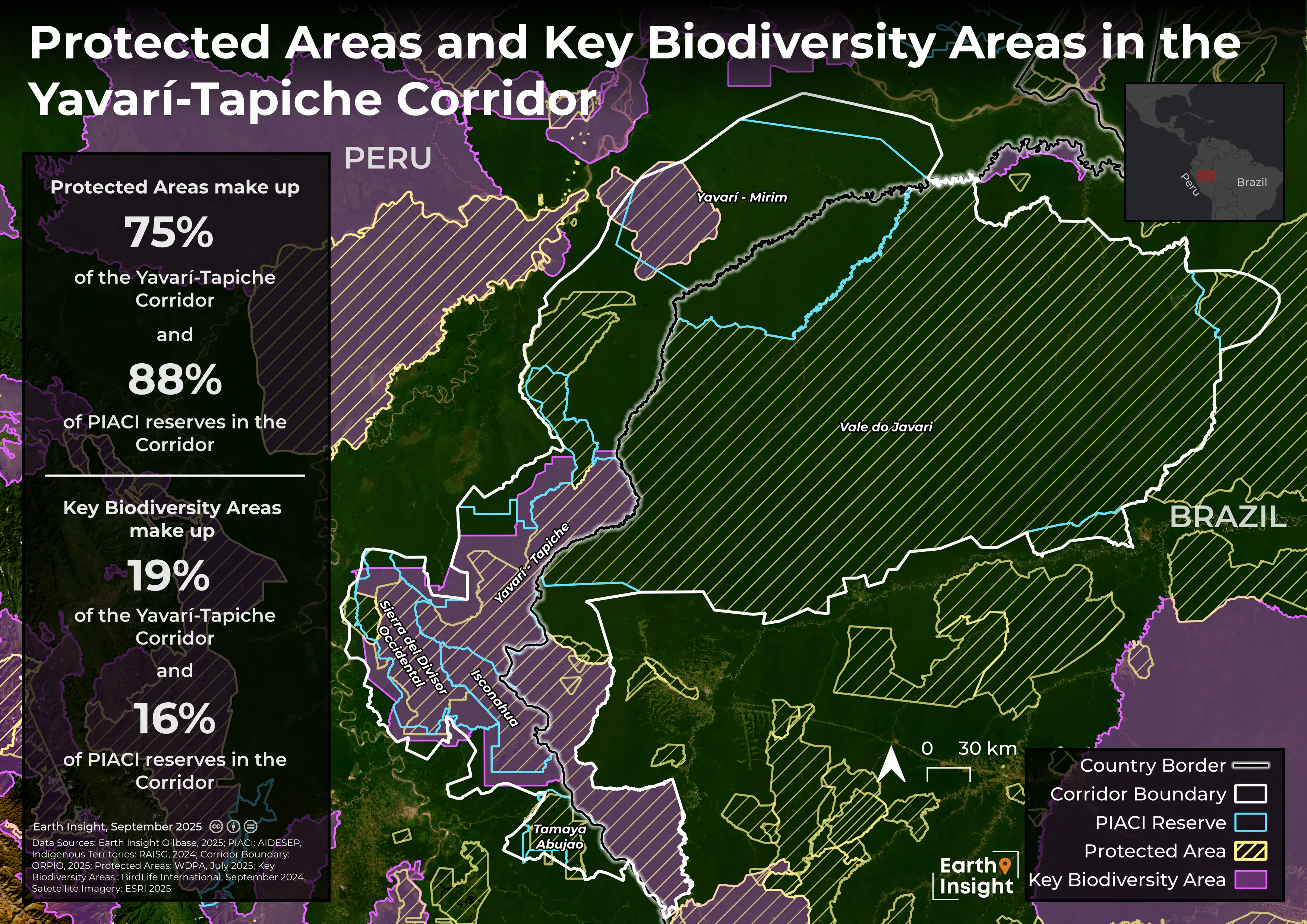
As one of the largest contiguous forests in the Amazon, the Yavarí-Tapiche Territorial Corridor would provide substantial contributions to international climate and biodiversity targets, including Target 3 (30×30) of the Kunming-Montreal Global Biodiversity Framework (GBF) and the UNFCCC
Why This Matters
Indigenous Peoples living in voluntary isolation are among the most vulnerable communities on Earth. Their survival depends on the integrity of their territories and their right to remain uncontacted.
Protecting the Yavarí-Tapiche Corridor is essential not only for Indigenous rights and cultural survival, but also for safeguarding one of the planet’s most important remaining intact forest ecosystems.
As governments debate the future of the Amazon, this report makes clear that the choices made today will determine whether these forests, and the peoples who protect them, can survive for generations to come.