High-Integrity 30x30 Implementation: Industrial Threats and Promising Pathways for Effective and Rights-Based Biodiversity Conservation
Groups Call for “High Integrity” 30x30 Implementation After Spatial Analysis Finds Protected Areas Overlap with 62 Million Hectares of Oil & Gas Blocks and 43 Million Hectares of Mining Concessions
A new report released by Earth Insight, the World Commission on Protected Areas, and partners argues that the success of the global 30x30 target must be measured by the quality of what is protected, not simply by the number of hectares counted. High-Integrity 30x30 Implementation: Industrial Threats and Promising Pathways for Effective and Rights-Based Biodiversity Conservation draws on pan-tropical spatial analysis and case studies from around the world to reveal an alarming overlap between large-scale extractive and industrial activity (such as oil and gas development and mining) and the ecosystems most critical to biodiversity. The report also describes concrete pathways toward high-integrity implementation, along with successful case studies. Downloadable maps from the report demonstrating these threats and solutions can be found here. Other report partners include: Key Biodiversity Areas Secretariat, Global Alliance of Territorial Communities, International Indigenous Forum on Biodiversity, and Campaign for Nature.
Key Findings
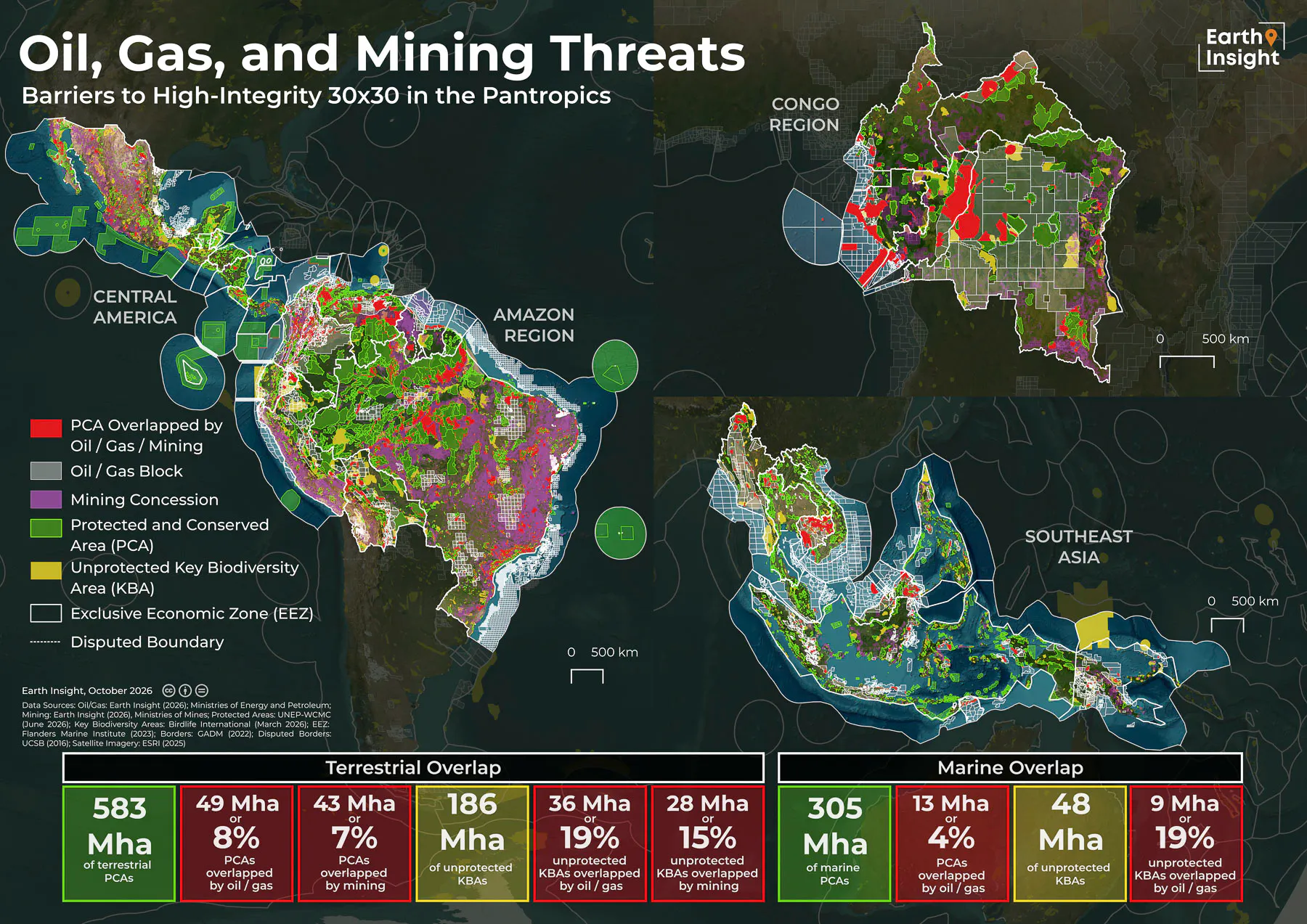
- Nearly 62 million hectares of protected and conserved areas, roughly 2.5 times the size of the United Kingdom, are overlapped by oil and gas blocks across the tropical countries analyzed, with a further 43 million hectares overlapped by mining concessions.
- Over 40 percent of identified terrestrial Key Biodiversity Areas in the Amazon remain unprotected, alongside 29 percent in the Congo Basin and more than 50 percent in both Southeast Asia and Central America.
- Across the four regions, 91 Mha of identified marine Key Biodiversity Areas remain outside of protected areas and 19% are threatened by oil and gas blocks.
- Unprotected Key Biodiversity Areas are particularly vulnerable to extractive industrial activity – over 19% of terrestrial areas identified as KBAs that are outside of conservation management are threatened by oil and gas blocks, and 15% are threatened by mining concessions.
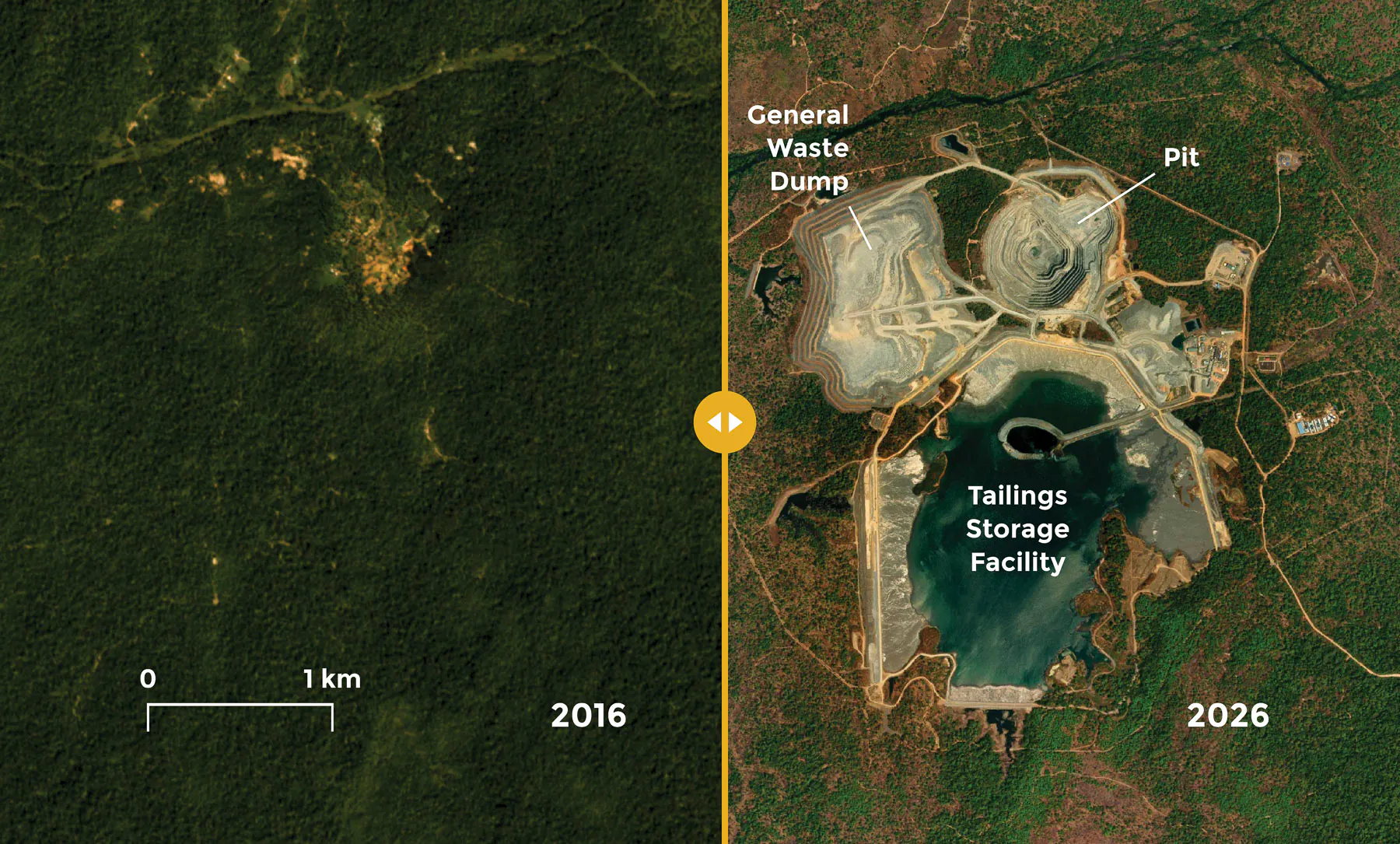
The Okvau open-pit gold mine inside Phnom Prich Wildlife Sanctuary, Cambodia, in 2016 (left) and 2026 (right)
Planet Labs (left) and Esri Satellite (right)
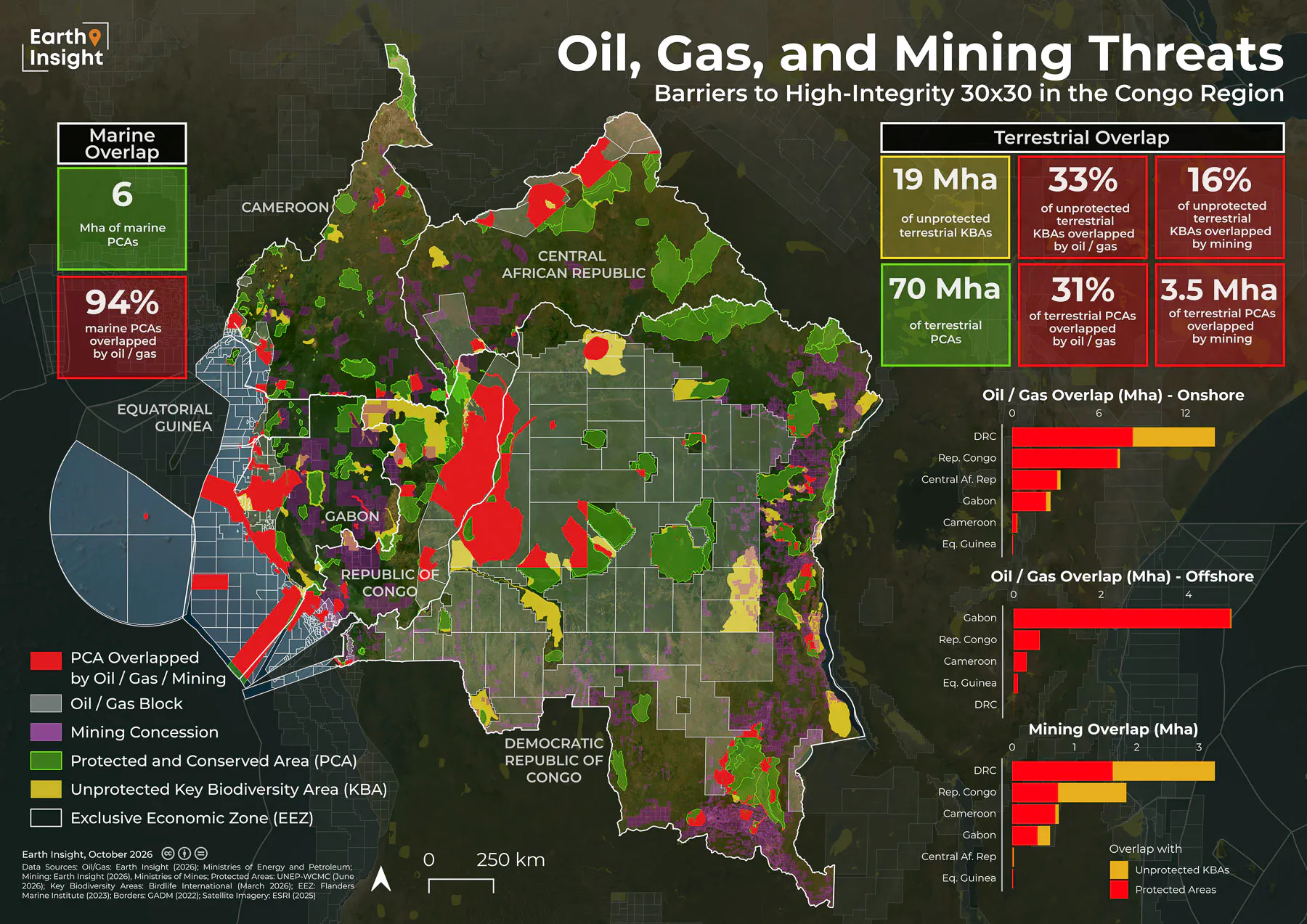
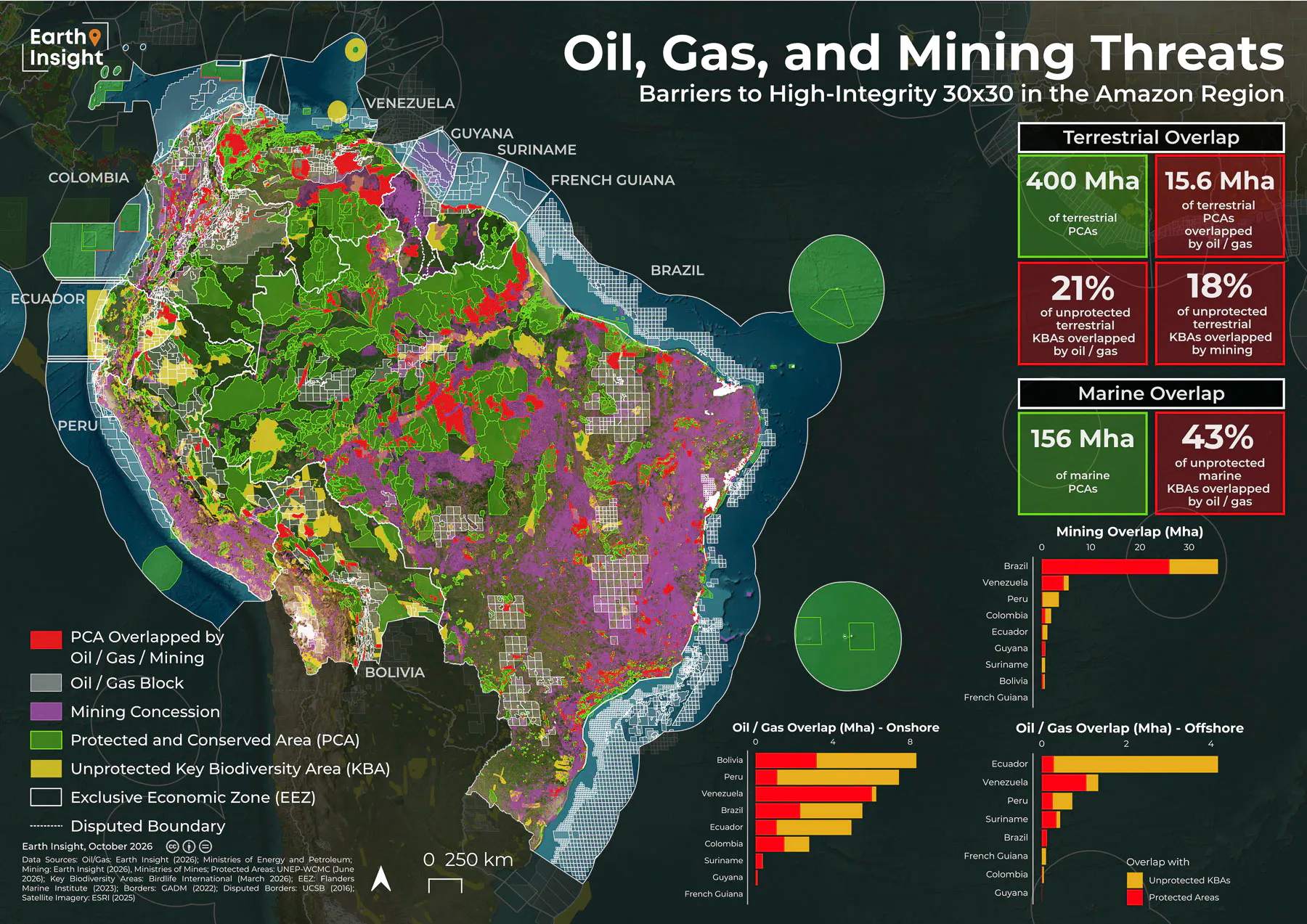
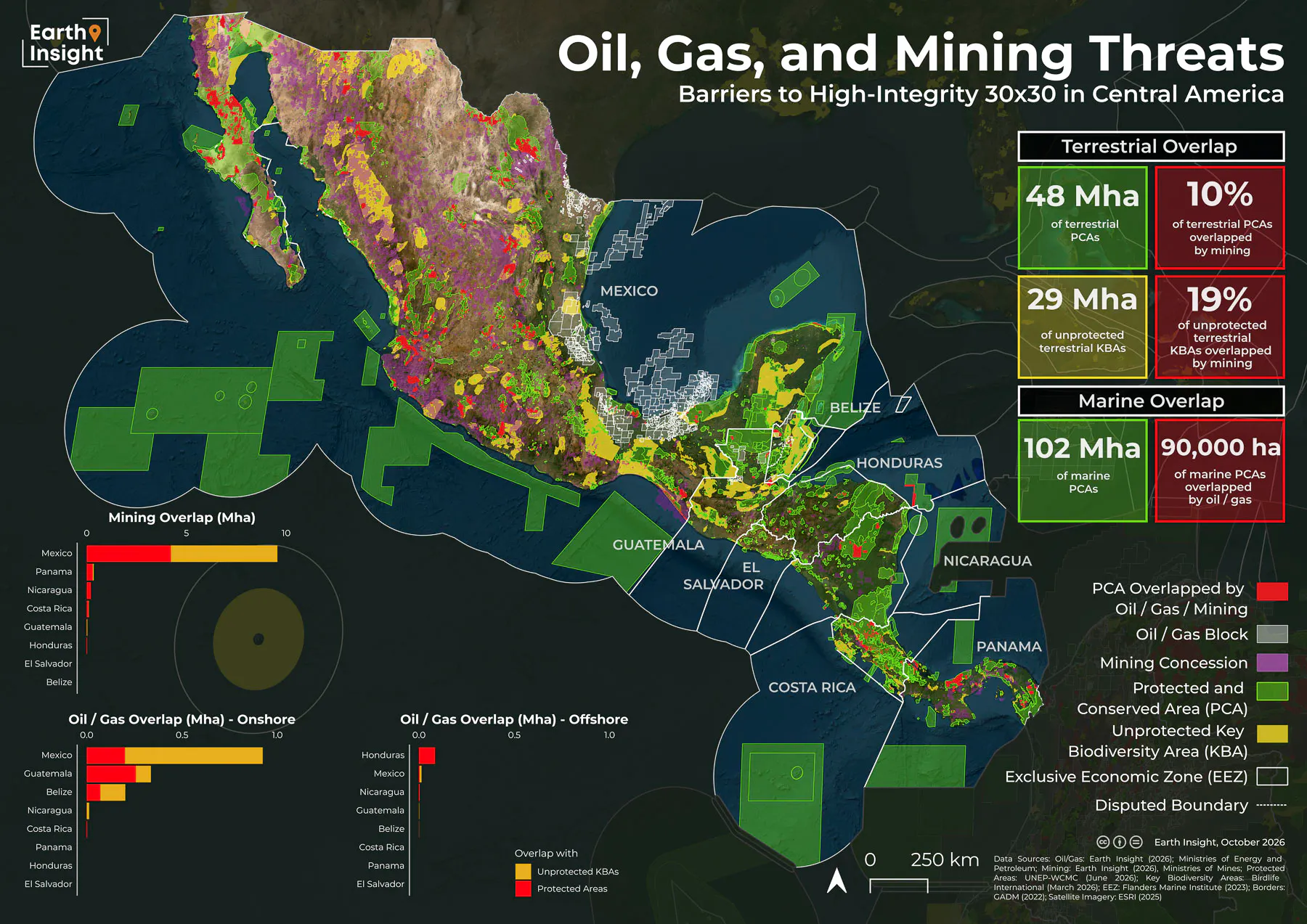
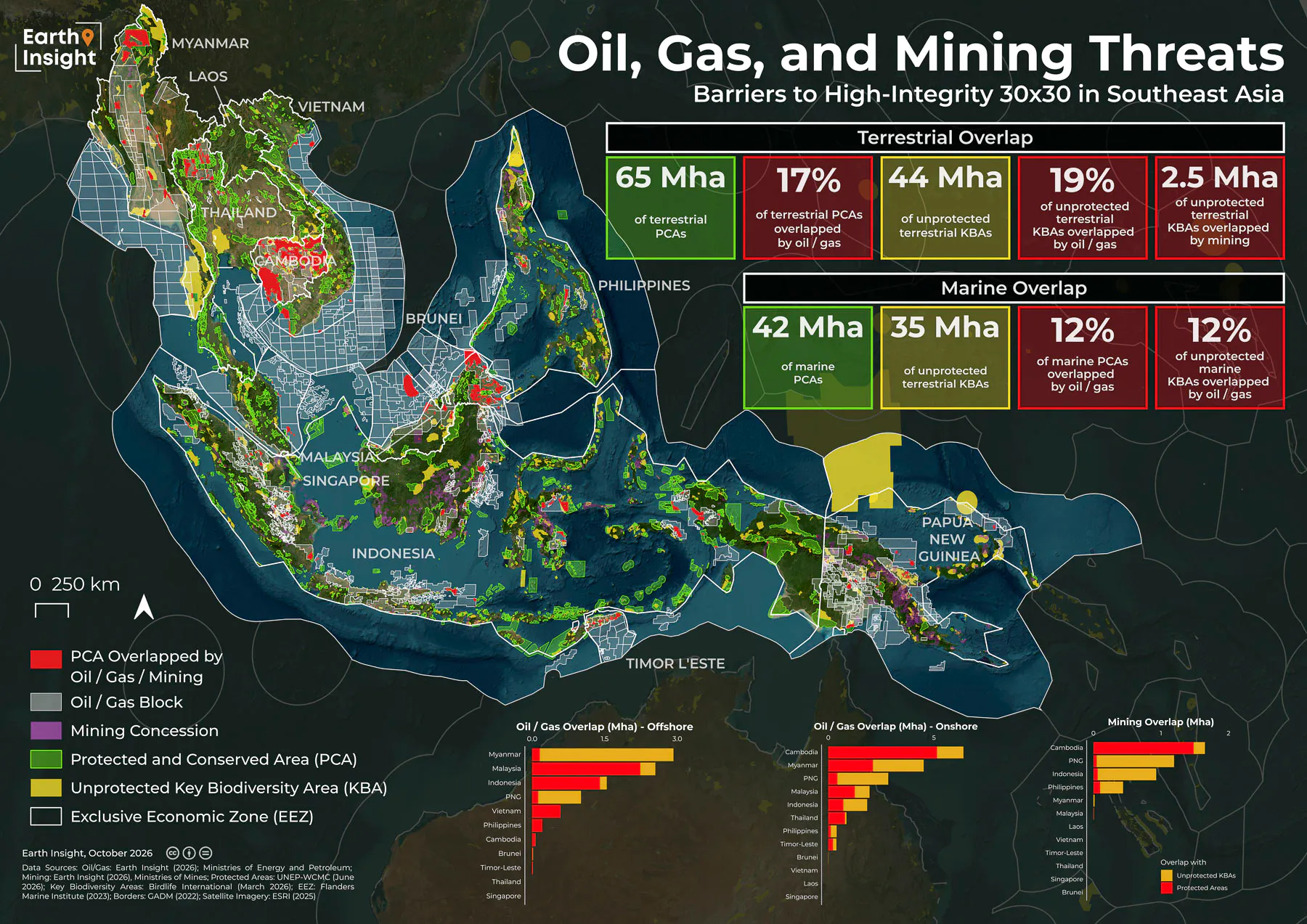
The Big Picture: 30x30 Cannot be Measured in Hectares Alone
Across tropical countries in our analysis alone, nearly 62 Mha of protected and conserved areas— equivalent to roughly 2.5x the size of the United Kingdom— are overlapped by oil and gas blocks, with an additional 42.7 Mha overlapped by mining concessions. Indigenous and community-stewarded lands, among the most effective conservation systems and biodiverse lands and waters on Earth, face escalating threats including industrial encroachment.
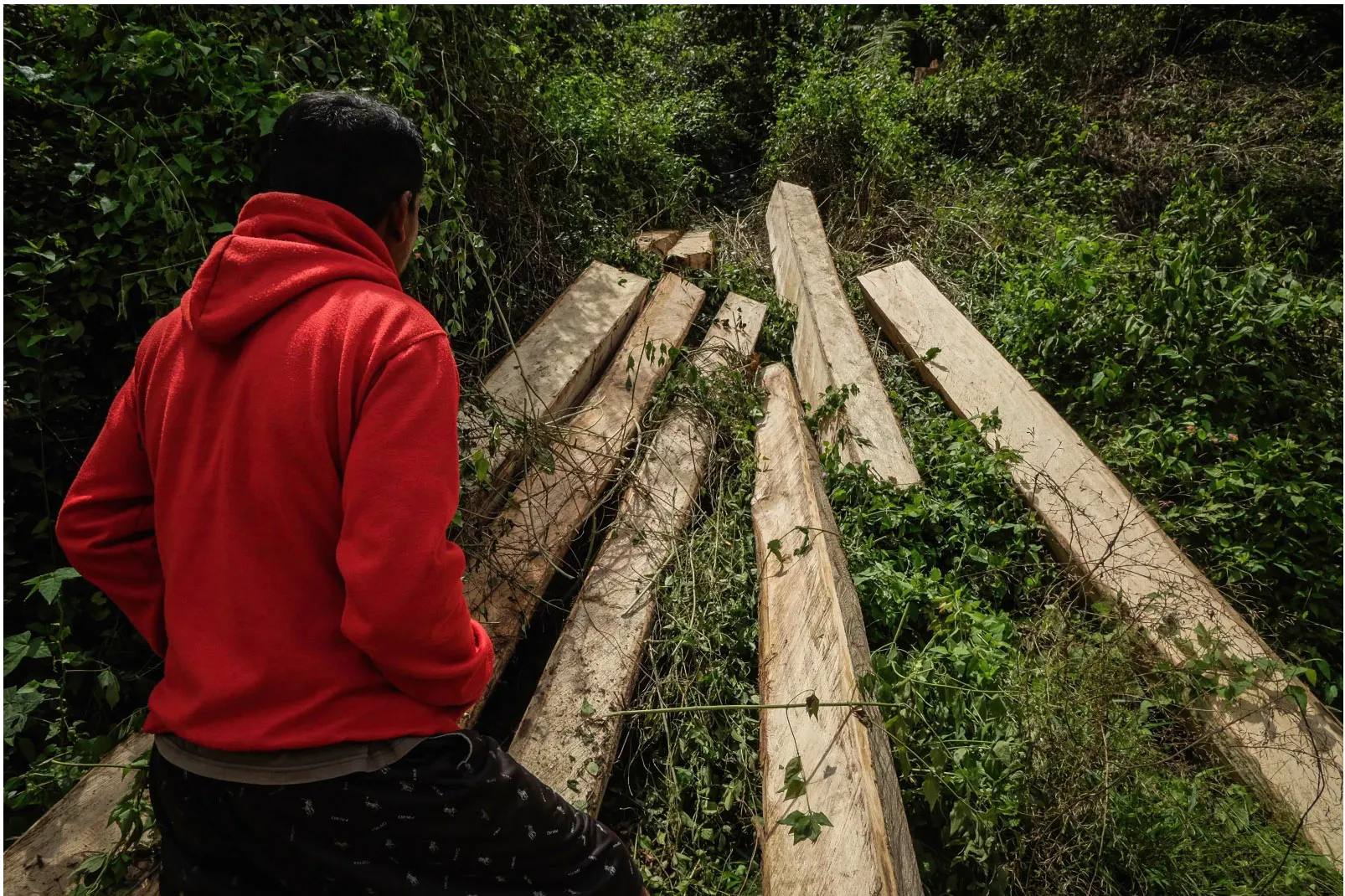
A man inspects logs near several wood pellet production companies in Pohuwato, Gorontalo province, Indonesia, Oct. 22, 2024.
AP Photo/Yegar Sahaduta Mangiri, File License this photo
The urgency of these findings cannot be overstated. Areas identified as critical for conservation are also among the most important for climate stability, water security, food systems, and human rights. If extractive and large-scale industrial expansion continues to penetrate these sites and protection is ineffective or located outside of the most important ecosystems for conservation, the world risks meeting numerical protection targets while failing to secure the long-term conservation outcomes that the GBF was intended to achieve.
In addition to identifying threats to protected areas, this report also looks at promising pathways toward high-integrity 30x30 implementation. Through case studies from around the world, legal extractive exclusion zones, rights-based governance, and cross-sectory policy alignment emerge as important solutions to closing the integrity gaps in 30x30 implementation. Critical levers for durable conservation outcomes include strong, enforceable standards that ban extractive and large-scale industrial activity in protected and conserved areas, recognition and resourcing of Indigenous and community tenure and stewardship, and transformative alignment of financial flows and economic incentives with conservation goals.
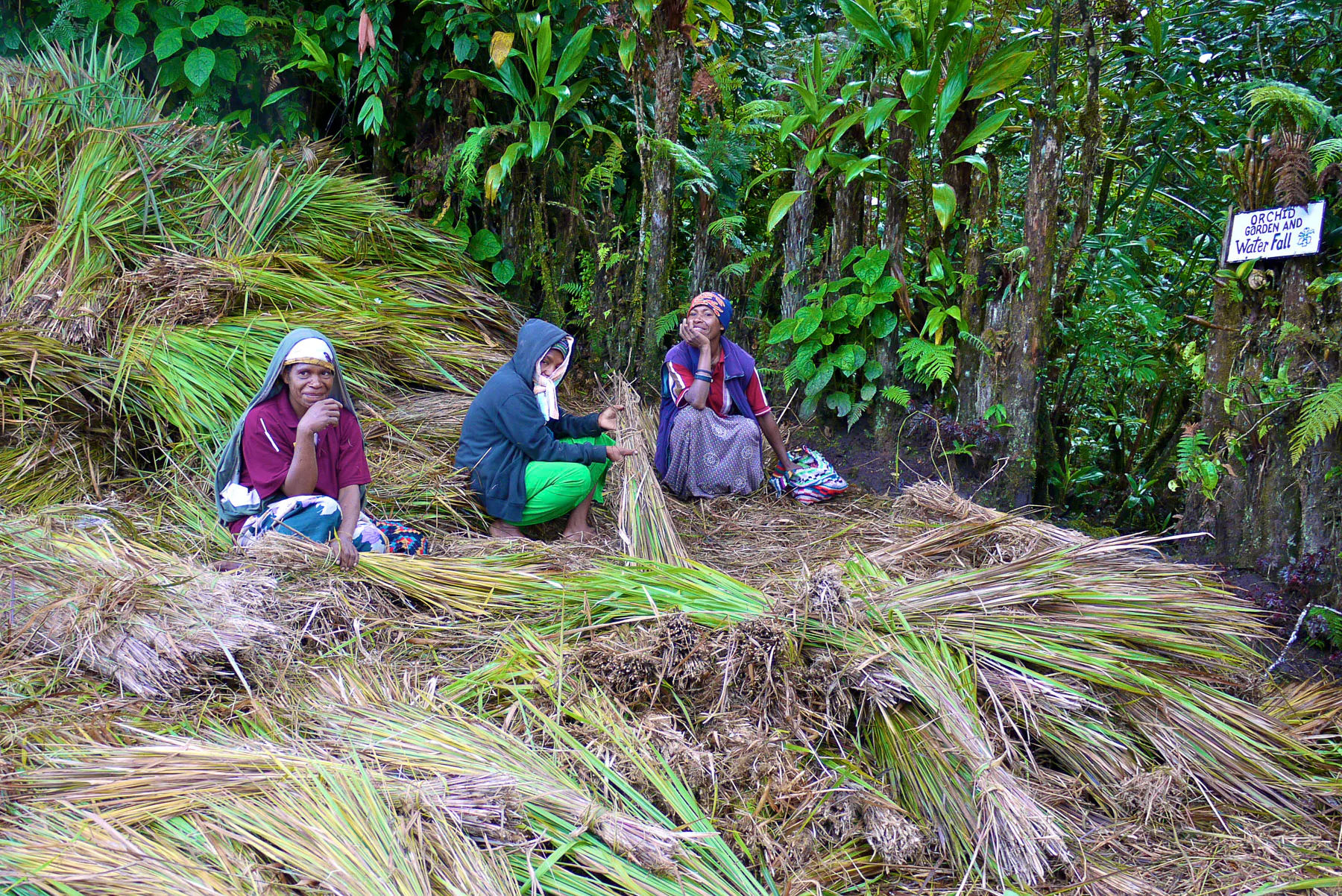
Women weaving skirts from dried grasses at Tari, in Huli country, Southern Highlands Province, Papua New Guinea Image Credit: Rita Willaert via Flickr (CC BY-NC-SA 2.0)
As seen in the maps, these overlaps are not isolated incidents, but a widespread and concerning pattern of contradiction across some of the planet’s most important natural environments. In many cases, blocks extend into areas that have been legally set aside for strict conservation, raising serious questions about the effectiveness, durability, and governance of existing protections. As these stark findings demonstrate, there remains a critical gap that must be closed between formal protection and ecological and social outcomes.
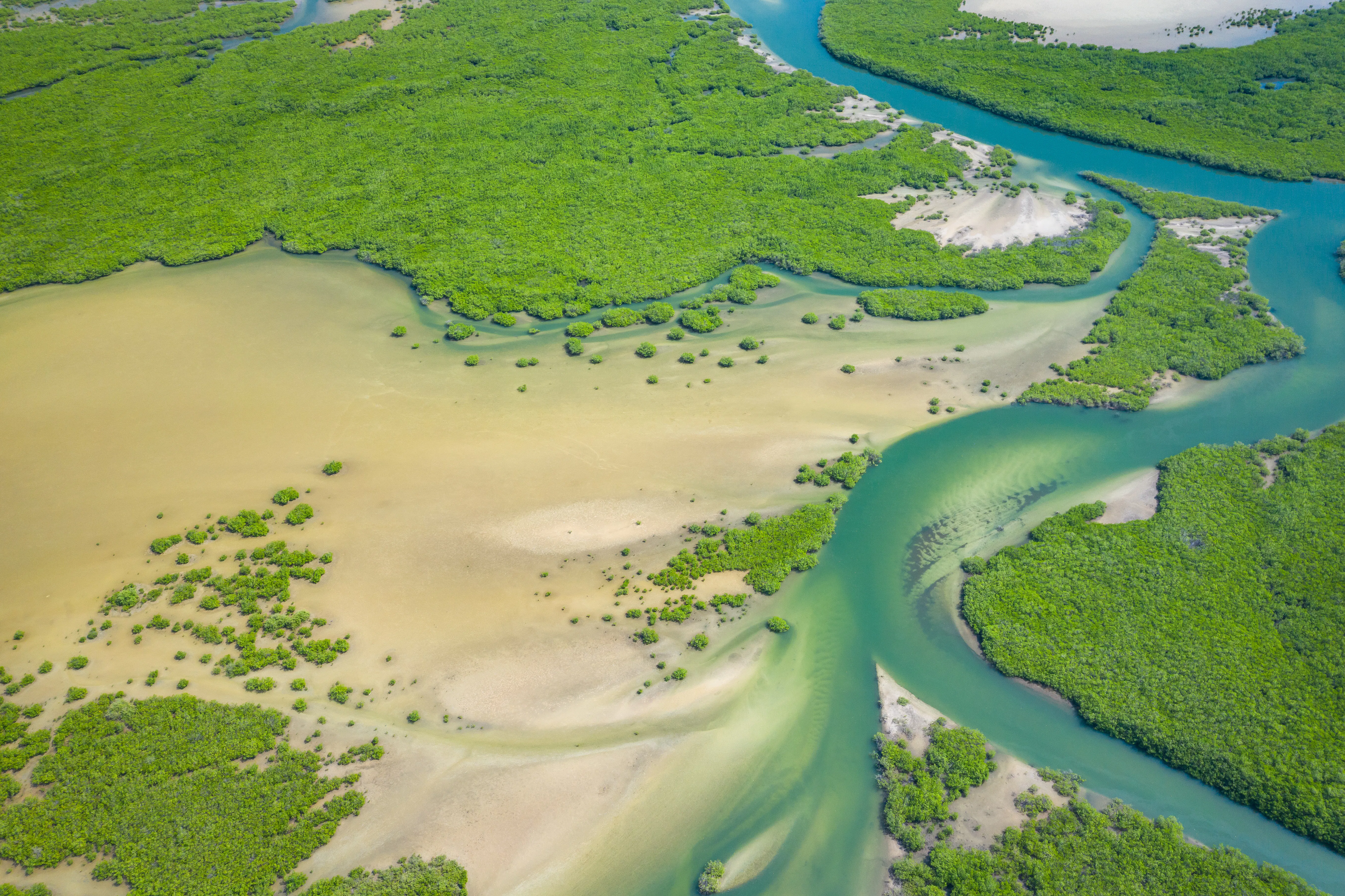
Mangrove forest in the Saloum Delta National Park near Joal-Fadiouth, Senegal Image Credit: Curioso.Photography via Adobe Stock
Promising Pathways
Alongside the threats, the report identifies concrete pathways toward high-integrity implementation. Legal exclusion of extractive activity from conservation areas, rights-based governance, and cross-sector policy alignment emerge as powerful levers for closing the integrity gap. The report points to recent momentum, including:
- Colombia's 2025 commitment to prohibit new oil, gas, and large-scale mining across its entire share of the Amazon, protecting more than 48 million hectares from new large-scale extractives;
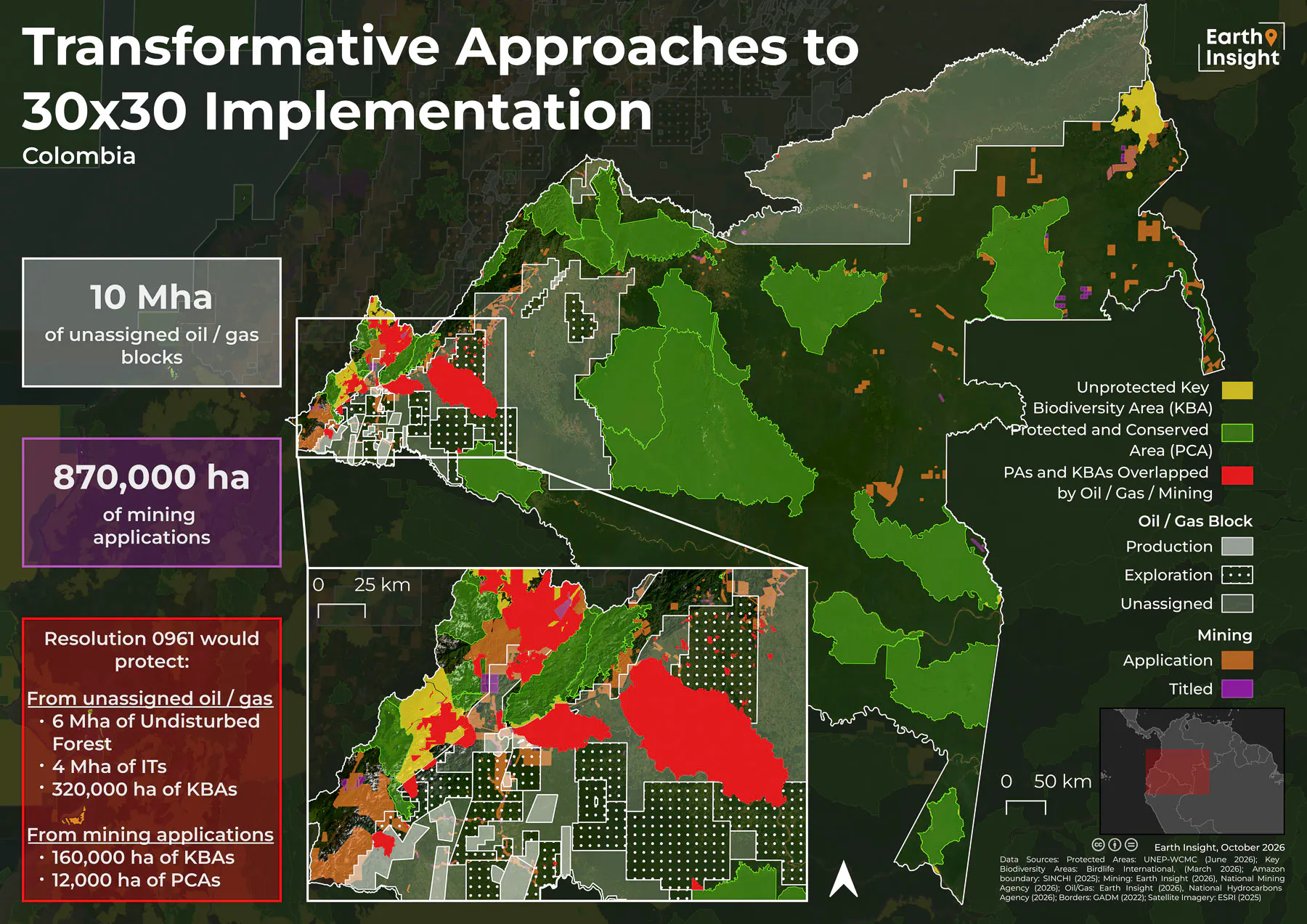
- Ghana's revocation of a regulation that permitted mining in forest reserves;
- Canada's Marine Protected Area Protection Standard;
- The Philippines' titling of Indigenous Peoples ancestral domains through Certificates of Ancestral Domain Title, which secure tenure and support rights-based stewardship of some of the country's most intact ecosystems, and
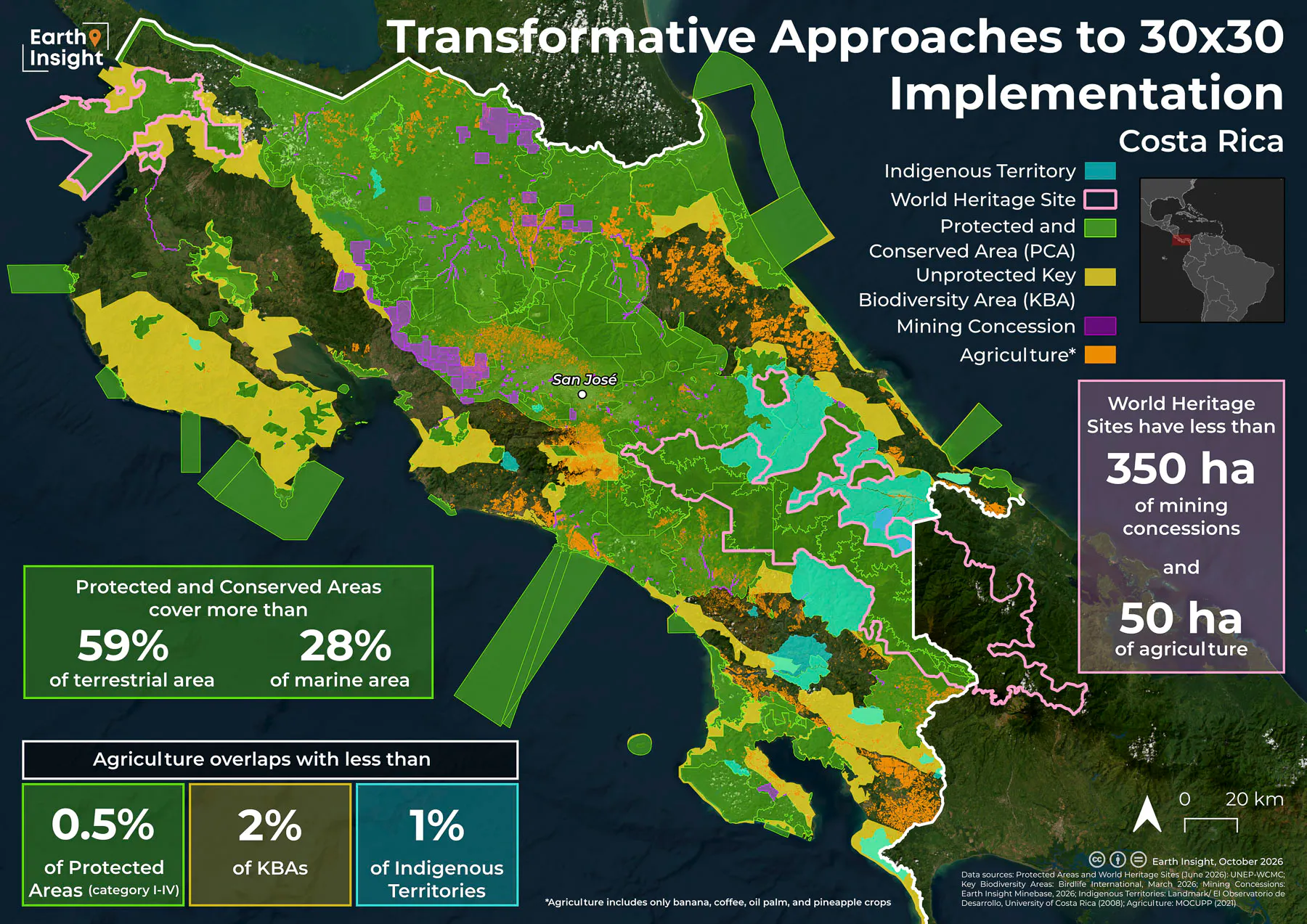
- Costa Rica's decades of investment in conservation, financing, and institutions.
Call to Action
The report calls on Parties to the Convention on Biological Diversity, along with public and private actors, to commit to high-integrity implementation of 30x30. Specifically:
- Governments should measure progress by biodiversity outcomes rather than hectares alone, avoiding "paper parks" and treating the 30 percent target as a global minimum rather than an ecological ceiling.
- There should be established and enforced geographical exclusions that keep new extractive and large-scale industrial activity out of protected and conserved areas, and review, retire, or phase out existing concessions that undermine ecological integrity.
- Expansion toward 30x30 should prioritize the places that matter most for biodiversity, beginning with Key Biodiversity Areas and intact, high-integrity ecosystems.
- Above all, governments must recognize, secure, and resource the rights, territorial governance, and traditional knowledge of Indigenous Peoples and local communities as essential partners in durable conservation.
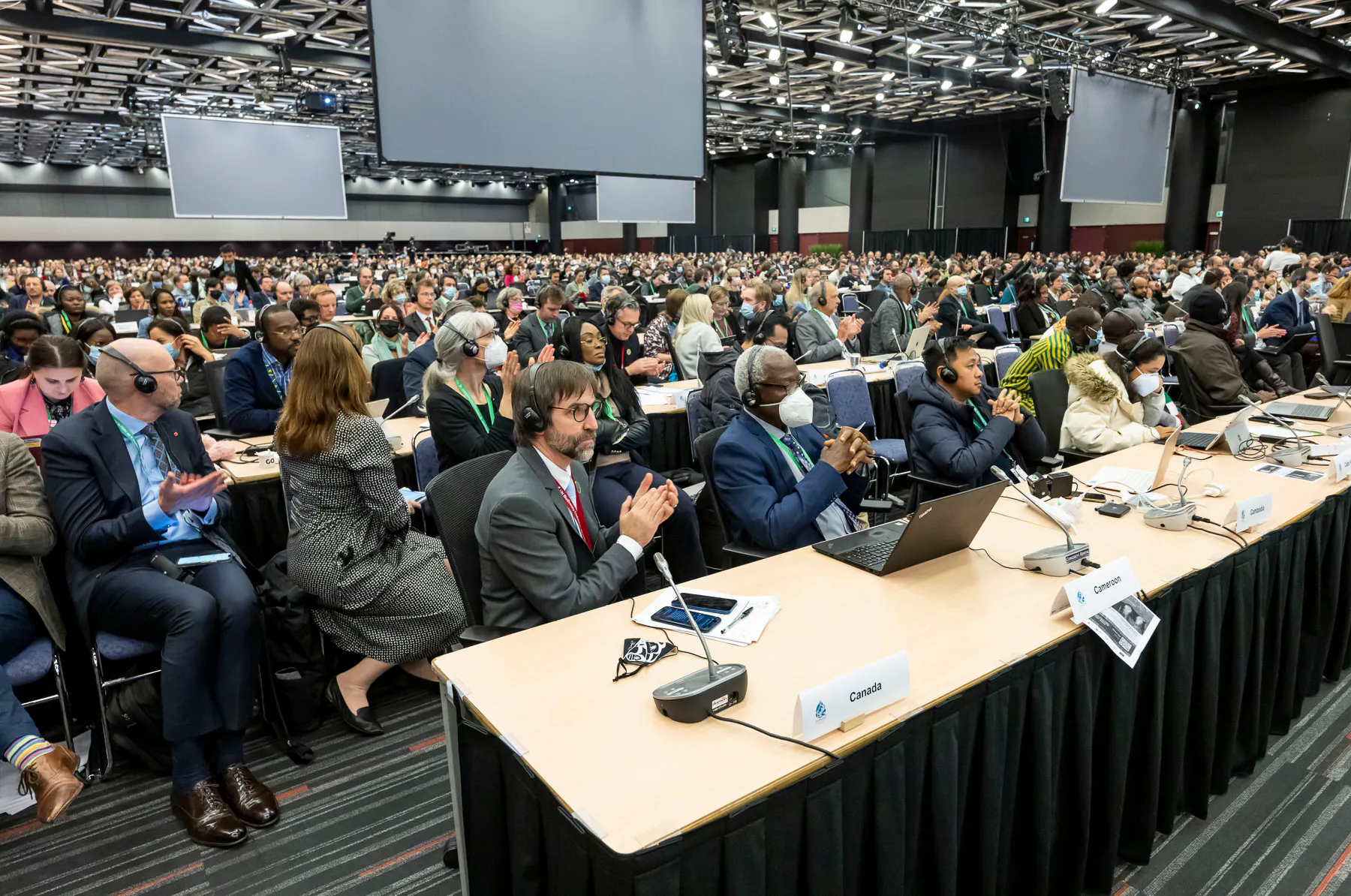
Delegations fill the closing plenary at COP15, where the Kunming-Montreal Global Biodiversity Framework was adopted, Montreal, Canada, December 2022. Image Credit: UN Biodiversity via Wikimedia Commons (CC BY 2.0)
With three years left, the report urges leaders at COP17 to keep their promises and ensure that the world's most important places for nature remain intact, connected, effectively governed, and free from the industrial pressures that threaten decades of conservation progress.