

FOR IMMEDIATE RELEASE: April 15, 2026
CONTACT: press@earth-insight.org
Indigenous Leaders and Climate Experts Call for Fossil-Free Zones Ahead of Landmark Energy Transition Conference
As more than 45 countries prepare to gather in Santa Marta, Colombia for the First International Conference on Transitioning Away from Fossil Fuels (April 28–29), Indigenous leaders and leading climate finance and policy experts convened today in an online press briefing to call on governments worldwide and the financial sector to establish Fossil-Free Zones (FFZs) — the most concrete solution yet to translate the global commitment to transitioning away from fossil fuels into enforceable, place-based action. (See related op-ed also published today in Inside Climate News by Bolivian Senator Cecilia Requena from Parliamentarians for a Fossil Free Future and Juan Pablo Osornio, Engagement and Policy Director at Earth Insight.)
Today’s briefing coincided with the release of new maps and analysis by Earth Insight showing that oil and gas blocks at various stages of development and production now overlap with 179 million hectares of intact tropical moist forests — roughly 21% of high-integrity tropical forests across the Amazon, Congo Region, and Southeast Asia. Fossil fuel expansion is also threatening coastlines and highly biodiverse marine regions, as recent analysis has shown that across 11 frontier areas, 19% of Marine Protected Areas are already overlapped by oil and gas blocks. Much of the looming fossil fuel expansion threats in the pan-tropics also overlap with Indigenous Peoples’ and Local Communities’ territories and customary lands. Recent research has shown, for example, that 12% of IP&LC lands in the Amazon are overlapped by oil and gas blocks and 38% of community forests in the Congo basin region are also overlapped by oil and gas blocks.
Fossil Free Zones are geographically defined areas of ecological, biodiversity, or cultural significance where fossil fuel exploration, extraction, and related infrastructure development are permanently prohibited. They translate the global commitment to transition away from fossil fuels into specific, enforceable, place-based decisions that governments can adopt at the national or subnational level — including through existing tools such as protected area designations and the legal recognition of Indigenous Peoples' territories. FFZs have also been recognized by the Inter-American Court of Human Rights and the International Court of Justice as effective tools for complying with legal obligations on climate action.
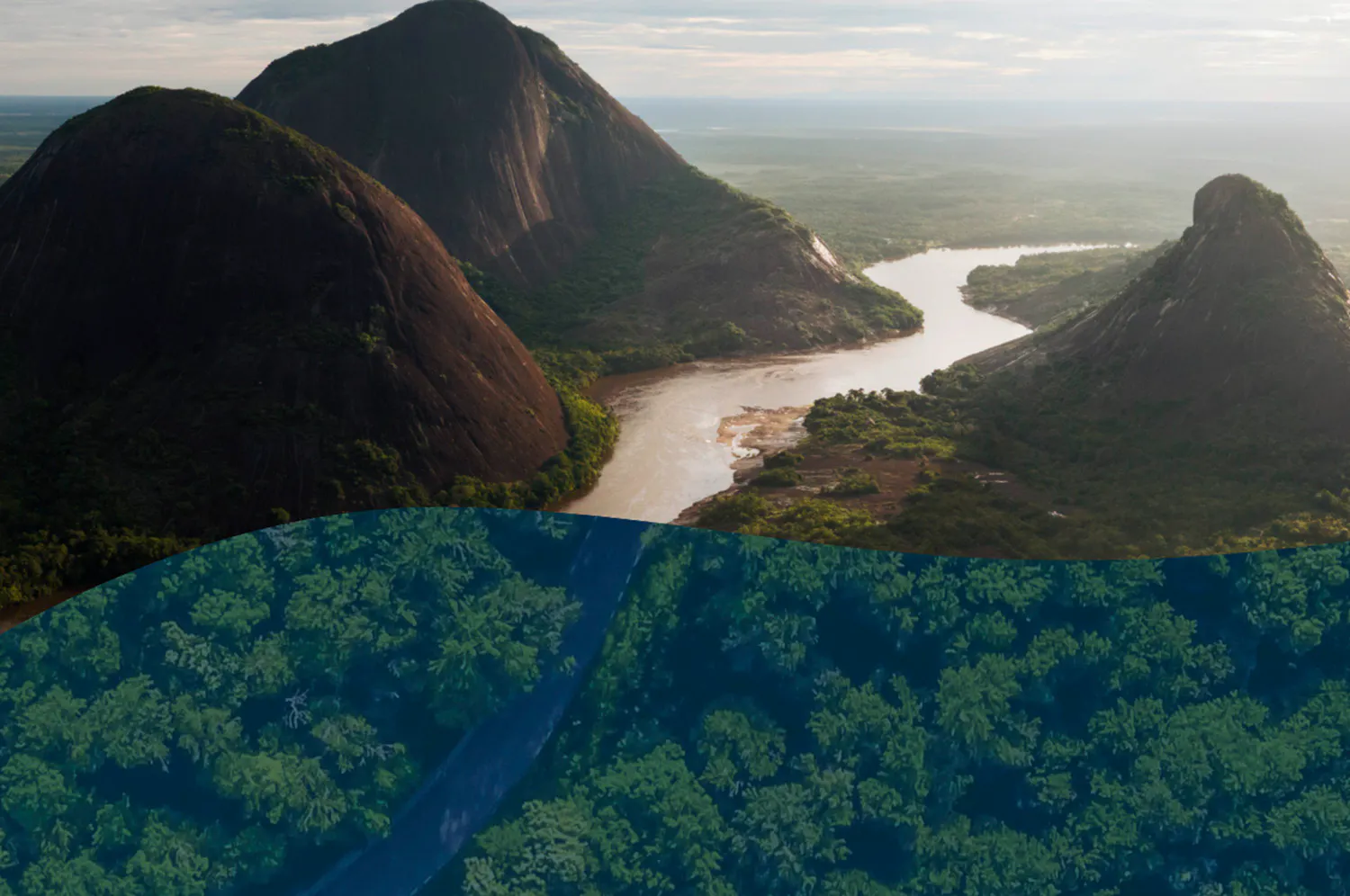
Colombia – the host of the upcoming conference – made history in September 2025 by becoming the first country to declare a region-wide FFZ, banning fossil fuel and large-scale mining extraction across its entire Amazon. The decision was supported by research demonstrating that extracting untapped reserves would generate billions of dollars in stranded assets while threatening nearly 70% of territories recognized under Indigenous Peoples' and local communities' governance models. Other countries leading the way include Mexico, Guatemala, Belize, Costa Rica, Canada, and the Philippines.
Colombia is also a country-member of the Fossil Fuel Treaty Initiative, along with 17 other nations, committed to stopping fossil fuel expansion through the advancement of a new legally binding mechanism. Colombia’s commitment to a fossil-free Amazon and its national “non-proliferation” commitment is illustrative of the interplay and synergy between fossil-free zones as areas of cultural and biodiversity significance in need of prioritization on the road to full country-level commitments and legally binding processes.
To date, over 500 sites and regions worldwide have declared themselves some form of Fossil Free Zone, and the International Institute for Sustainable Development (IISD) has identified 58 active restrictions on fossil fuel production across 25 countries and 27 subnational jurisdictions.
Over the past few years, the concept of exclusion zones has also been applied in the financial sector. Major banks have started shifting their financing away from high-polluting sectors like coal and fracking, and are increasingly doing the same with oil and gas expansion in the Amazon: eleven banks – including BNP Paribas, HSBC, and Citibank – have adopted various forms of exclusion policies to restrict financing for fossil fuel projects in the region.
2026 represents a rare moment of political alignment across three major international processes: the COP30 Presidency roadmap on Transitioning Away from Fossil Fuels, the COP30 Presidency roadmap on Halting and Reversing Deforestation, and the Global Biodiversity Framework review at CBD COP17 in Yerevan. FFZs sit at the intersection of all three — bridging the climate and biodiversity agendas at a moment when coordination across these frameworks is urgently needed.
Quotes from Today’s Fossil Free Zones Media Briefing (reach out to press@earth-insight.org to schedule on-the-ground interviews in Santa Marta):
Ignacio Arróniz, Senior Associate, Earth Insight: "Fossil Free Zones are one of the most concrete, actionable tools governments have to translate their commitment to transitioning away from fossil fuels into real, enforceable decisions on the ground. The First International Conference on Transitioning Away from Fossil Fuels in Santa Marta is the moment for governments to add them to their national energy plans."
Juan Carlos Jintiach, Executive Secretary, Global Alliance of Territorial Communities (GATC): "For Indigenous Peoples, stopping fossil fuel extraction is not only a climate imperative, but it is also essential to defending our territories, our governance systems, and our right to self-determination."
Alice McGown, Program Manager, Leave it in the Ground Initiative (LINGO): “Fossil Free Zones are real-life right-now examples demonstrating that a post-fossil fuel world isn’t just possible; it’s happening already. It’s time to recognise their leadership and include them in our phase-out at Santa Marta.”
Hannah Saggau, Senior Climate Finance Campaigner, Stand.earth: "Fossil-free zones are already a reality in the finance sector, and have proven effective in protecting areas that are vital to the planet, such as the Amazon. Banks like BNP Paribas and HSBC have started to pull back from the most harmful oil and gas companies in the Amazon, showing that change is not only possible but underway. The next step is clear: make strong policies the norm for all banks, not the exception, so that the most sensitive regions on Earth are truly off-limits to fossil fuel expansion."
Bruna Campos, Senior Campaigner, Offshore Oil and Gas, Center for International Environmental Law (CIEL): "Safeguarding our ocean is a cornerstone of climate action and a prerequisite for a successful fossil fuel phaseout. Transition plans must prioritize ending extraction in marine regions critical to ecological integrity, human rights, and climatic stability. By designating 'fossil-free zones' in vital habitats like coral reefs, mangroves, and seagrass meadows, we accelerate the global shift away from fossil fuels."
Andrés Gómez, Latin American Coordinator, Fossil Fuel Treaty Initiative: "Fossil Free Zones represent the vital first step toward protecting critical territories such as the Amazon, yet they require a binding legal instrument to function at scale: A Fossil Fuel Treaty. Indeed, this Treaty will be one of the central solutions debated at the Santa Marta Conference. In a context where fossil fuel imperialism threatens sovereignty and peace, Colombia and Latin america – through this historic gathering – are assuming global leadership to chart the path toward a just phase-out of production and to legally safeguard the protection of our most vulnerable and valuable peoples and ecosystems.”
# # #