
New Analysis Shows Accelerating Threats to Biodiversity and Indigenous Peoples from Indonesia’s Wood Pellet Supply Chains
New spatial analysis by Earth Insight with the Indonesian environmental NGO Auriga Nusantara and Indonesian Indigenous group AMAN links new deforestation in the world’s third largest rainforest to biomass haul zones from Indonesia's wood pellet and wood chip industry. Exports to countries that burn wood as a “renewable energy” threaten tropical forests, Key Biodiversity Areas, and Indigenous territories, notably the customary forest of the Polahi, an Indigenous people living in voluntary isolation on Sulawesi island.
The new analysis builds on Unheeded Warnings: Forest Biomass Threats to Tropical Forests in Indonesia and Southeast Asia, co-published in October 2024 by Earth Insight, Auriga Nusantara, Forest Watch Indonesia, Trend Asia, Solutions for Our Climate, and others, which first documented the scale of deforestation driven by wood-to-energy demand from Japan and South Korea. Two years on, the new findings show the accelerating threat of Japan’s record-breaking wood pellet imports to Indigenous Territories, intact forests, and rainforest species found nowhere else on Earth.
Despite clear evidence that wood pellets are sourced from Indonesia’s rainforests. Japan imports continue to grow: According to the Indonesian Ministry of Environment and Forestry (MoEF), in 2025, Japan accounted for nearly 75% of Indonesia’s wood pellet exports. ]
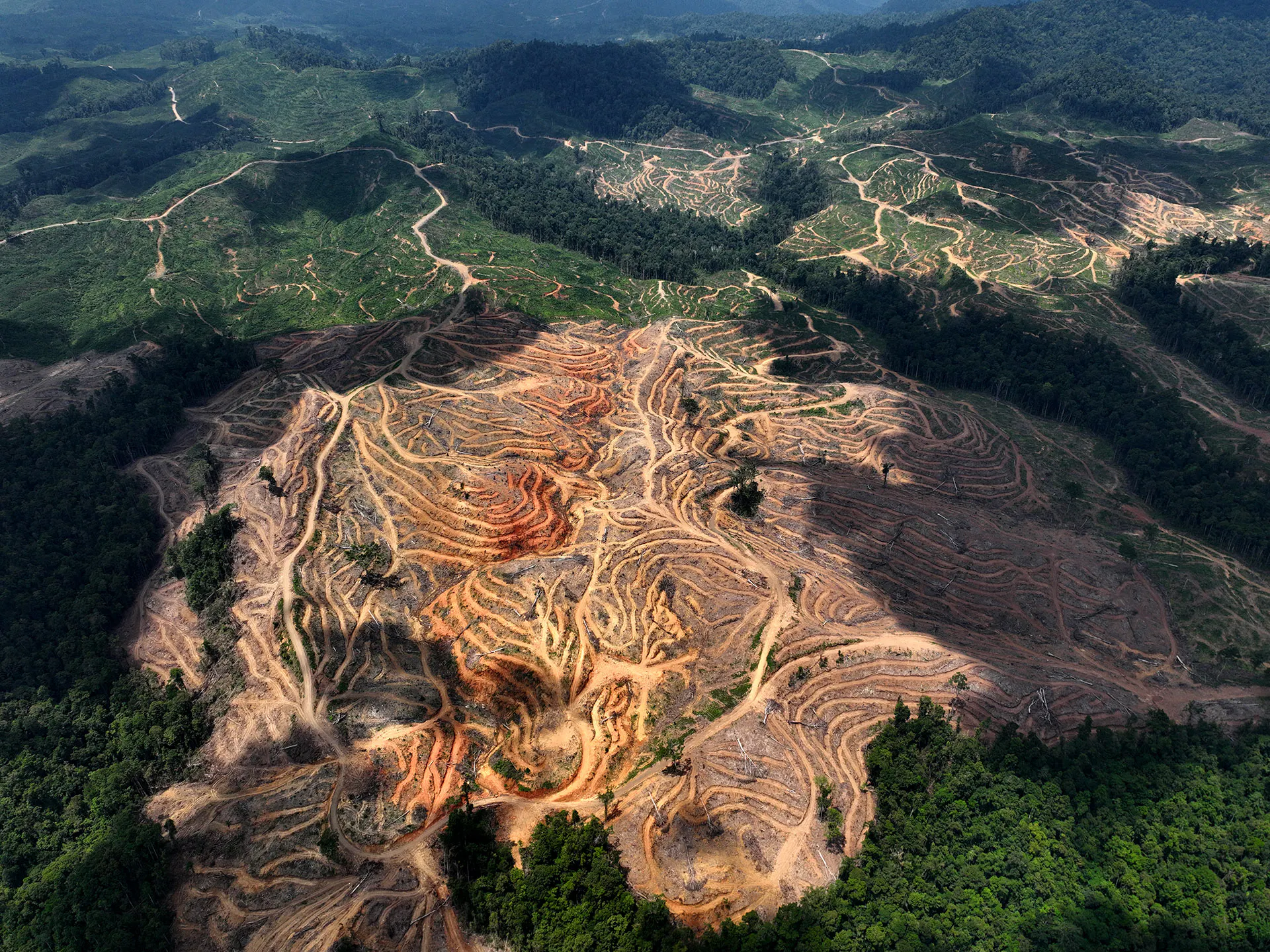
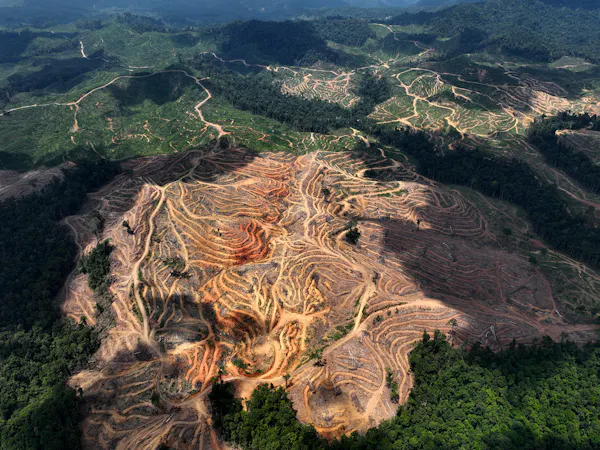
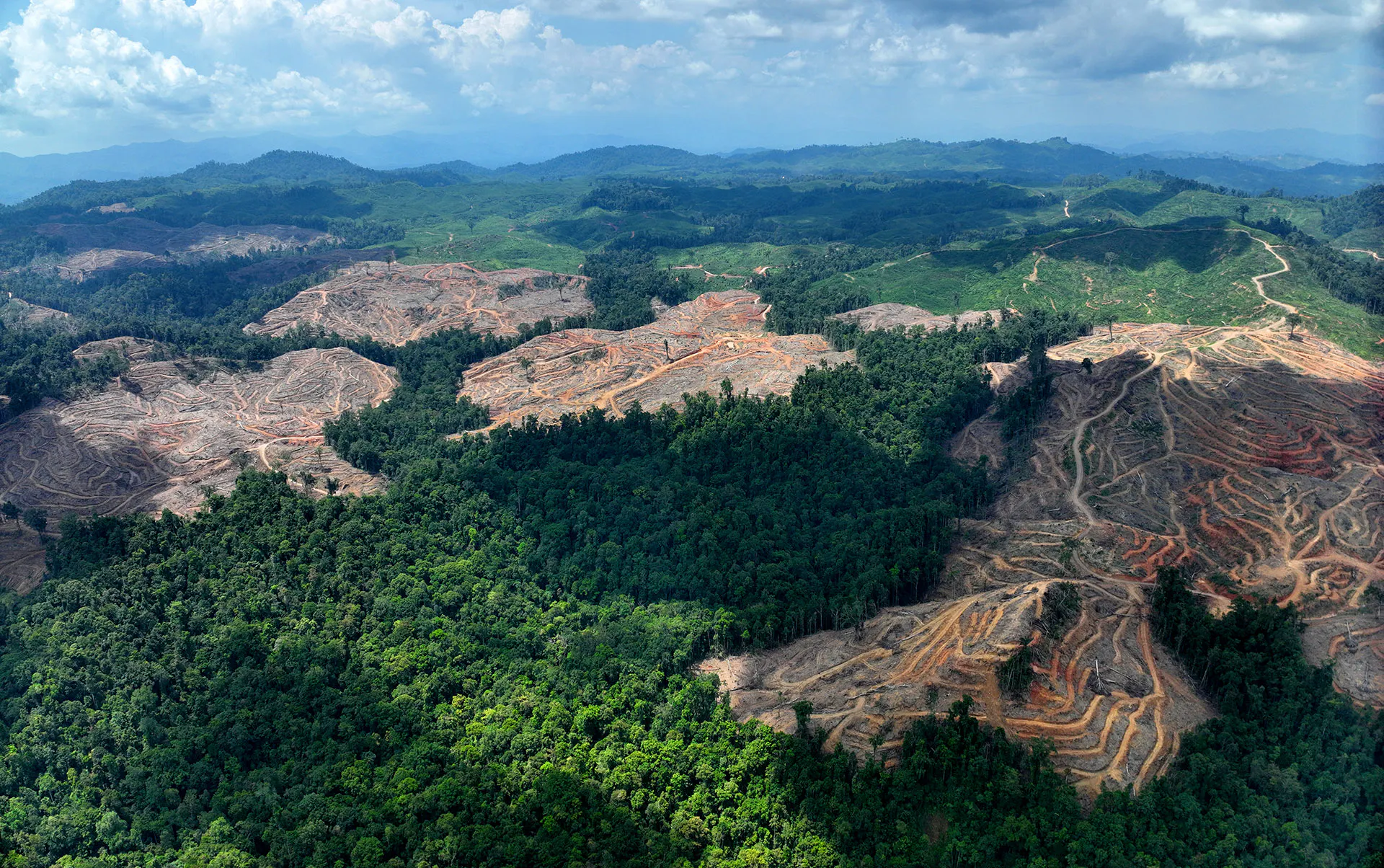
Clear-cut forest concession in Gorontalo haul zone of a wood chip plant.
Auriga Nusantara
New Findings
● Wider Indigenous territorial overlap across Indonesia. 347 Indigenous territories, covering more than 4.3 million hectares in Indonesia,are now threatened by chip mill haul zones.
● Forests and biodiversity areas at risk. More than 11 million hectares of total forest cover, of which over 6.9 million hectares are undisturbed, sit within the haul zones of Indonesia's chip mills. Within these zones, 43 Key Biodiversity Areas — totaling more than 2.8 million hectares — are at risk.
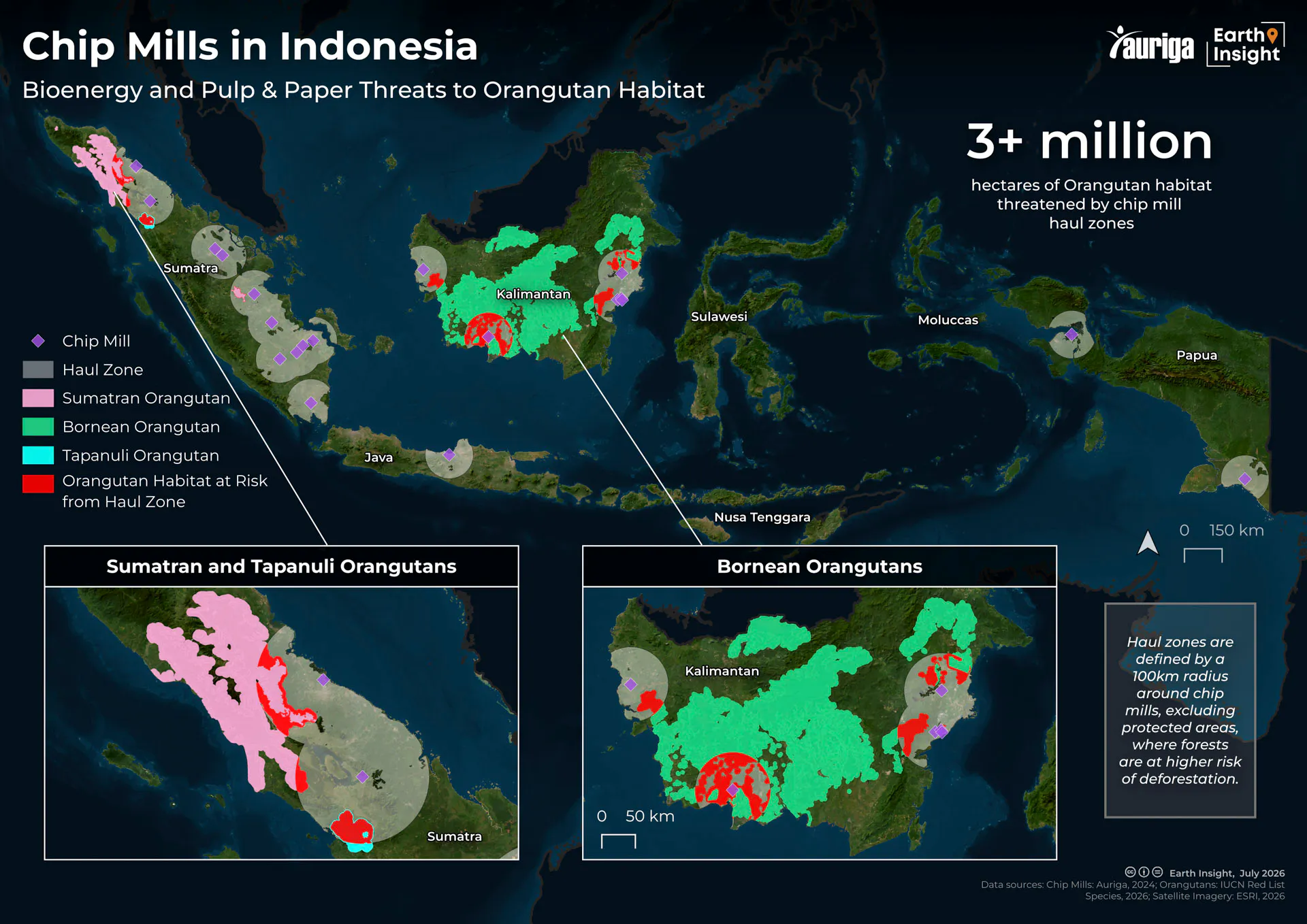
● Chip mill haul zones threaten critically endangered orangutan habitat. Chip mill haul zones overlap 3 million hectares of orangutan habitat, threatening the Sumatran, Tapanuli, and Bornean species.
● Indigenous Polahi people are at growing risk of displacement. The Polahi people are found within the eastern concessions linked to PT Gorontalo Panel Lestari's wood pellet facility, an area including more than 24,500 hectares of tropical moist forest. Expanded wood pellet and industrial sourcing will further endanger the Polahi Indigenous Peoples living in voluntary isolation and initial contact who depend on intact forests and ecosystems for survival.
Threats to Indigenous Peoples
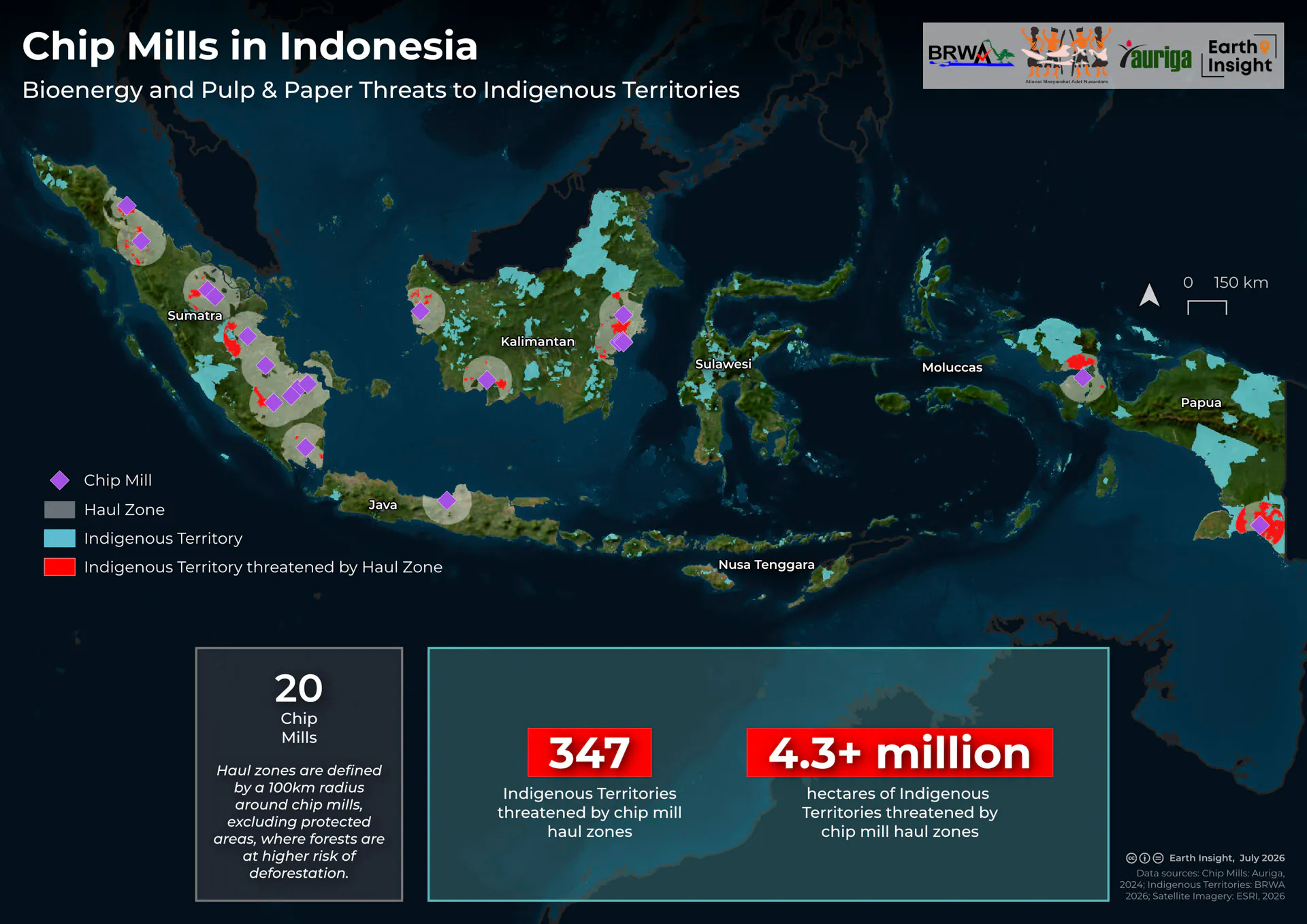
Across Indonesia, forest concessions for wood bioenergy overlap with 347 Indigenous territories on more than 4.3 million hectares of some of the most biodiverse forests on Earth. The sheer scale of overlap underscores how foreign wood pellet demand threatens biocultural landscapes integral to biodiversity, carbon stocks, and ecosystem stability. In the last ten years, industrial expansion has taken more than 11.7 million hectares of Indigenous territories, an area larger than South Korea.
Forests and Key Biodiversity Areas
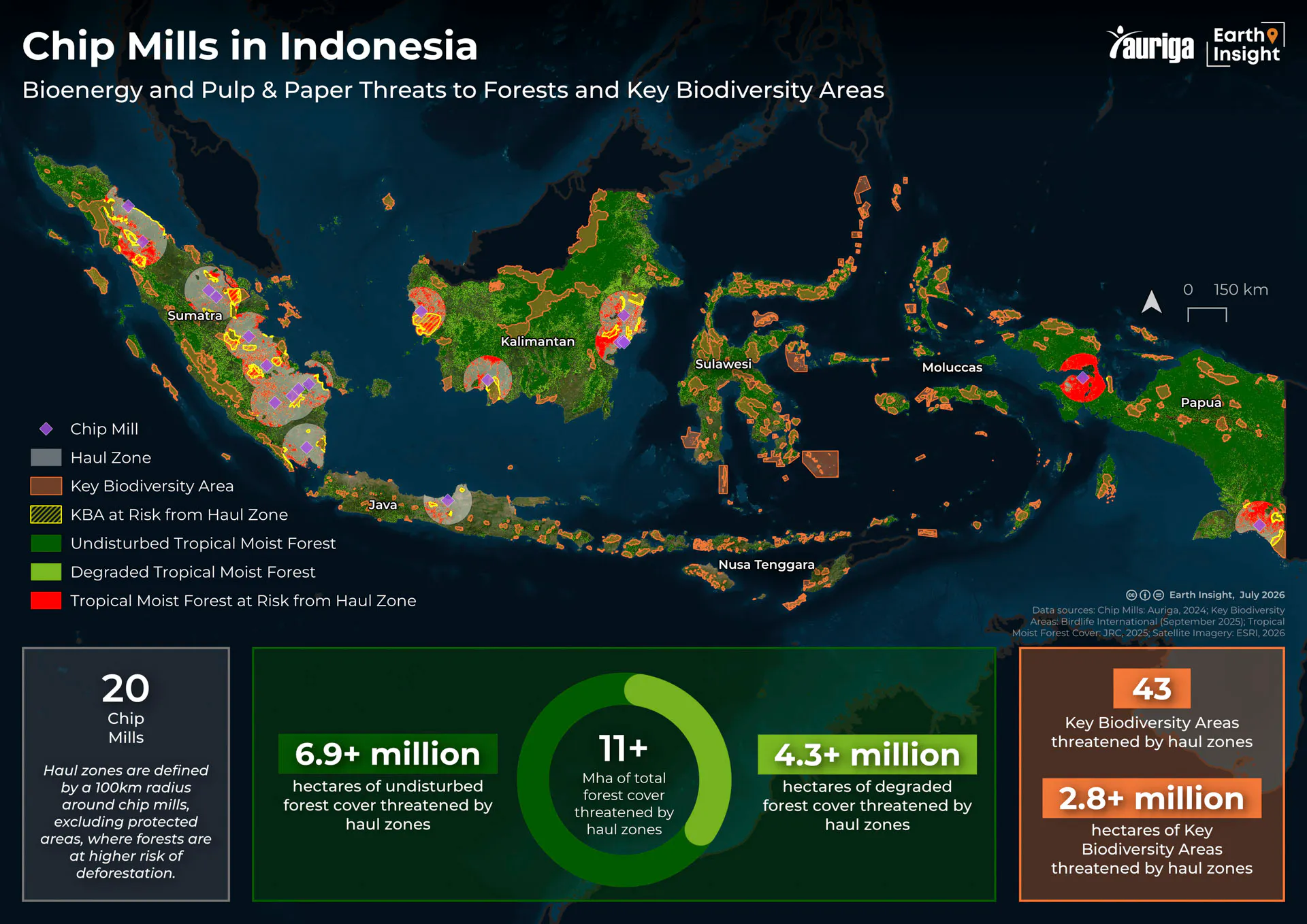
Indonesia is home to some of the Earth’s most biodiverse and carbon-rich forests. Yet the government has turned more than 11 million hectares of total forest cover into concessions for “haul zones” for wood bioenergy. These zones, half (6.9 million hectares) of which cover undisturbed forest, contain 43 Key Biodiversity Areas, larger than 2.8 million hectares.
Orangutans Endangered
Wood pellet demand threatens the habitats of critically endangered species, including the Sumatran tiger, orangutan and rhinoceros, and iconic animals such as the Sulawesi crested black macaque, the Sumatran elephant, and Sunda pangolin.
At least 64 of the earth’s 516 primate species are found in Indonesia’s forests. Chip mill haul zones overlap more than 3 million hectares of orangutan habitat, threatening Sumatran, Tapanuli, and Bornean species.
Sulawesi island is the habitat of 17 endemic primate species. Gorontalo’s forest ecosystems provide habitat and connectivity for such endemic species as the anoa buffalo, the North Sulawesi babirusa (known as “prehistoric deer-pigs”), hornbills, macaques, and tarsiers.

These forests connect to the broader Nantu–Boliyohuto reserve, one of Sulawesi’s most important remaining strongholds for wildlife found nowhere else on Earth. Clear-cut concessions isolate wildlife populations, disrupt ecological connectivity, and strip the biological richness that makes Gorontalo a globally significant center of endemism.
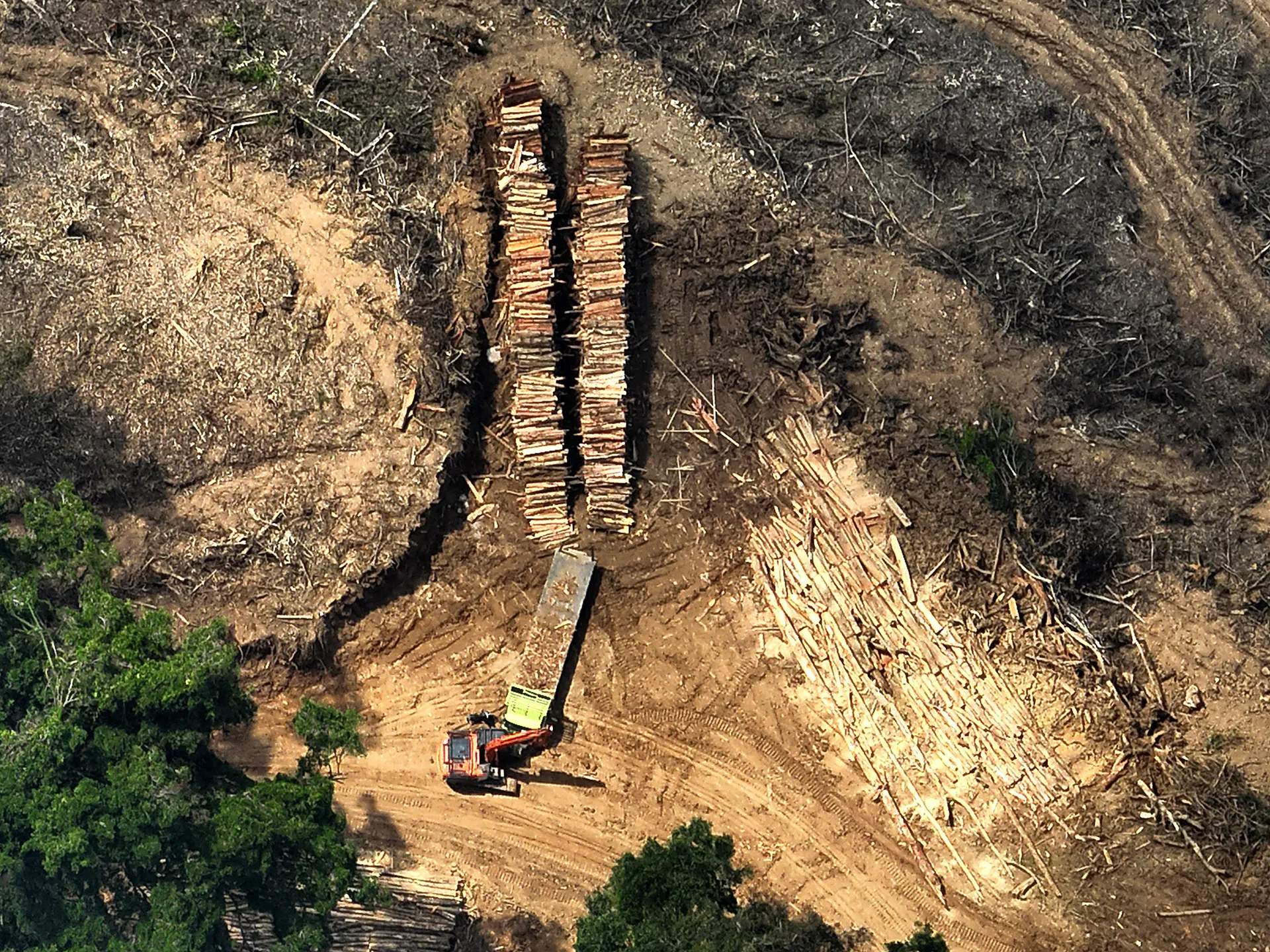
Clear-cut forest concession in Gorontalo haul zone of a wood chip plant.
Auriga Nusantara
Gorontalo: Ground zero for deforestation
The forests of Gorontalo province on Sulawesi island are ground zero for sky-rocketing wood pellet exports to Japan. Gorontalo supplies more than 94% of Indonesia’s wood pellets exports to Japan and South Korea; 80% from natural forests.
Recent spatial analysis shows accelerating deforestation in forest concessions that supply wood to the PT Gorontalo Panel Lestari Wood Pellet facility.
Threats to Isolated Indigenous Peoples
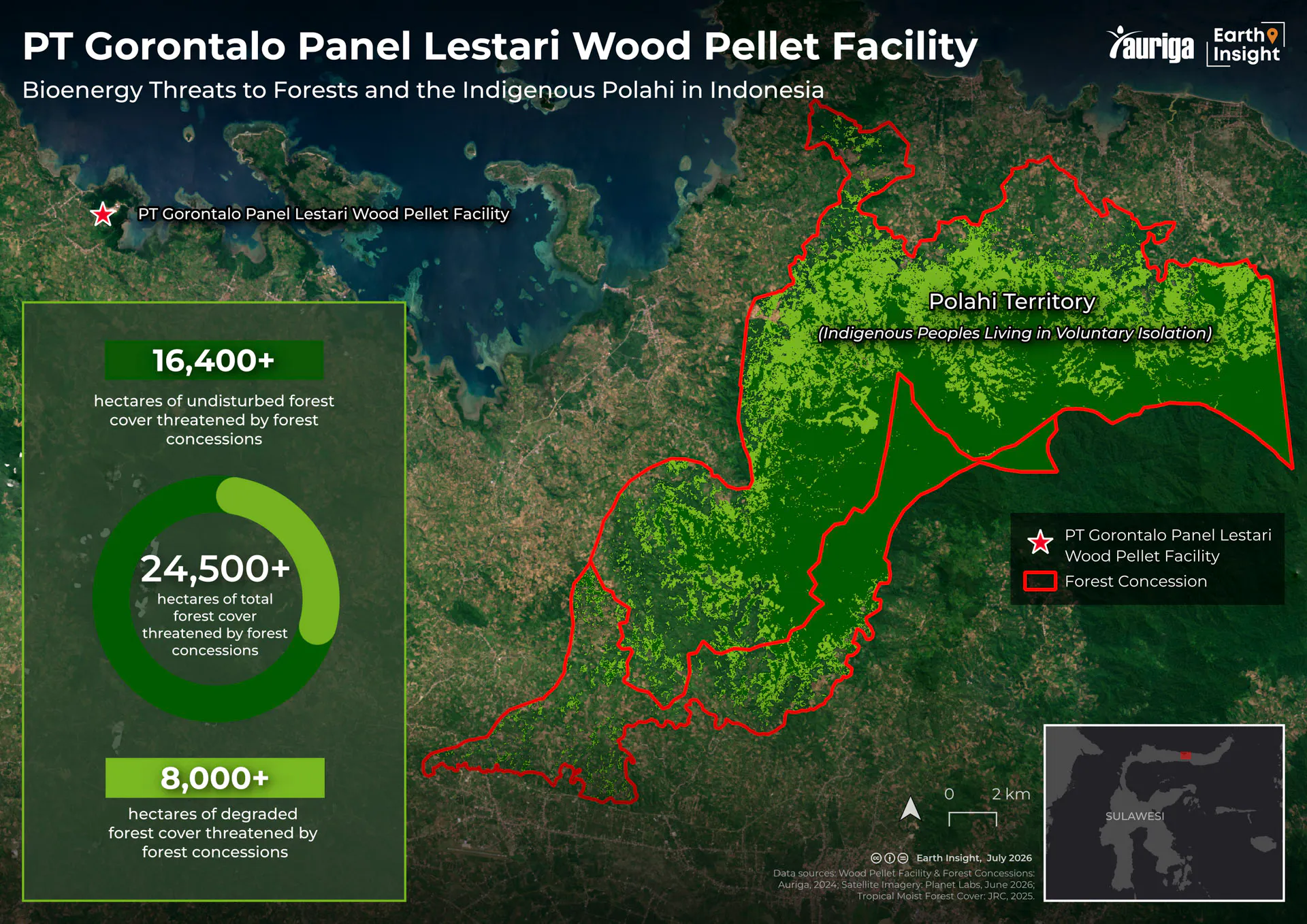
The Polahi people live within concessions linked to the wood pellet facility in Gorontalo, in an area with more than 24,500 hectares of tropical moist forest. The only way to ensure their cultural survival in this region is to keep the remaining 24,000+ hectares of forests intact.
In the Gorontalo language, Polahi means “fugitive,” in reference to Indigenous people who have lived in the most remote forests since at least the seventeenth century. While there is scant documentation of the forest governance of the Polahi, one researcher described a system of practices informed by forest deities who communicate through dreams. Tiny beings who live in trees and waterfalls are known as the Lati. The Polahi burn incense and chant an incantation to ask the Lati to move before they cut a tree or harvest wild honey.
Wood Bioenergy is a False Climate Solution
The premise that forest biomass is a renewable energy source is based on carbon rules that hide full emissions. In fact, biomass power plants emit 50%–60% more CO2 per megawatt-hour than modern coal plants.
There is Still Time to Stop This False Climate Solution From Further Impacting Threatened Indigenous People and Critical Forests
Forests need to be protected, not burned.
Five years ago, more than 500 scientists and economists predicted that climate policies to increase renewable energy by treating biomass as a carbon-neutral source of energy “create a model that encourages tropical countries to cut more of their forests.”
Their warning is playing out with dire consequences across Indonesia. The country’s forests, which store vast amounts of carbon, regulate regional rainfall patterns, and support the livelihoods, food systems, and cultural traditions of millions of Indigenous Peoples and local communities, are being burned as wood pellets, largely in Japan and South Korea.
Short-sighted policies to burn wood pellets from vital forest habitats and homelands will exact far-reaching consequences for climate stability, biodiversity conservation, and some of the planet’s most irreplaceable ecosystems.
Recommendations:
Global:
• Report and account for bioenergy CO2 emissions in a manner similar to fossil fuels.
• Exclude biomass from subsidies; fund low-emission alternatives. •
Include the threat from the international trade in wood pellets in the International Union for the Conservation of Nature (IUCN) species assessments and Convention on International Trade in Endangered Species (CITES) regulations.
• Designate Indigenous peoples’ and local communities’ lands and areas of endemic or threatened species, including Key Biodiversity Areas, as “no-go” areas for industrial expansion, including bioenergy extraction and cultivation.
• Complete High Carbon Stock/High Conservation Value assessments before expanding cultivation.Adopt the No Deforestation, No Peat, No Exploitation (NDPE) policy.
• Ensure Free, Prior, and Informed Consent (FPIC).
Japan:
• Reform policy for carbon accounting transparency through a centralized system that details fuels in biomass power generation and counts CO2 emissions at the power plant level.
• Achieve a coal exit as soon as possible, regardless of biomass co-firing.
• Eliminate subsidies for biomass power generation; fund low emissions solutions.